Tian Skultan
Tian Titirat Skultantimayta (born in Bangkok, lives and works in Leipzig) explores the passage of time and fleeting states, focusing on perception, interconnectedness, and the continuum between generative process and realized work.
| Education | |
| 2019–2022 | Master of Fine Arts, Public Art and New Artistic Strategies, Bauhaus-Universität Weimar, Germany |
| 2011–2015 | Bachelor of Arts, Communication Design, Chulalongkorn University, Bangkok, Thailand |
| Selected Solo/Duo Exhibitions | |
| 2020 | Fallen Cycle, YOD Gallery, Osaka, Japan |
| 2019 | Behind Time, Gallery VER Project Room, Bangkok, Thailand |
| 2019 | Fallen Cycle, Tentacles Art Space, Bangkok, Thailand |
| 2019 | Converging Horizons, The Life, Fukuoka, Japan |
| 2018 | Parallel Windows, Bangkok Biennial Pavilion, Hae Winkel, Maastricht, Netherland |
| 2015 | Filling the Void, The Jam Factory Gallery, Bangkok, Thailand |
| Selected Group Exhibitions | |
| 2024 | Constellation, BUG, Bangkok, Thailand |
| 2022 | Tracing Latencies, 136 Goethe Lab, Singapore, Singapore |
| 2022 | Space, Activate!, Kunsthaus Erfurt, Erfurt, Germany |
| 2021 | Encounter With A Sleeping Giant, Matthäikirchhof, Leipzig, Germany |
| 2020 | One Minute Monitor Project, BUG, Bangkok, Thailand |
| 2020 | Shinano Primitive Sense Art Festival, Shinano Hall, Nagano, Japan |
| 2019 | Fukuoka Asia Art Week, Fukuoka Asian Art Museum, Fukuoka, Japan |
| 2019 | Fukuoka Asia Art Week, Fukuoka City Science Museum, Fukuoka, Japan |
| 2019 | Smart and Small, YMD, Khonkaen, Thailand |
| 2018 | Post Scripts, Bangkok Biennial Pavilion, Praisaneeyakan, Bangkok, Thailand |
| 2018 | Urban Media Art Kitchen, Public Art Lab, Berlin, Germany |
| 2018 | In the Kingdom, 140th Anniversary of B.Grimm, BACC, Bangkok, Thailand |
| 2018 | Unknown Asia Extra Asian Art Exchange, Daibiru Honkan, Osaka, Japan |
Residency History | |
| 2020 | Koinono Residency, Tinos, Greece |
| Selected Publications | |
| 2017 | 108 Emerging Contemporary Artists to Watch, book published by Office of Contemporary Art and Culture, Ministry of Culture, Thailand |
| Selected Press | |
| 2018 | Art4d Magazine, No. 265, on Memorial of Time |
| 2018 | Matichon Newspaper, 31 August 2018, on Memorial of Time |
| 2018 | Bangkok Post Newspaper, 1 August 2018, on Memorial of Time |
| 2015 | The Jam Factory Magazine, No. 08, on Filling the Void |
| Awards and Grants | |
| 2018 | Unknown Asia Extra Asian Art Exchange Award, Osaka, Japan |
| 2015 | Brandnew Art Project Award, Bangkok, Thailand |
In Place, 2026
Series
75 × 10 × 88 cm.Presence remains, in absence.In this series, the objects are reconstructed from elements of the artist’s family household, shaped by the collective memories of family members. Parts of domestic objects are replaced with glass. The form remains, while glass holds its place.Glass takes the place of what is no longer there. It carries weight, while altering what it holds. What remains takes another form.
It retains a trace of what was there.
The work traces how a presence continues after departure, in relation to an experience of loss within the family.
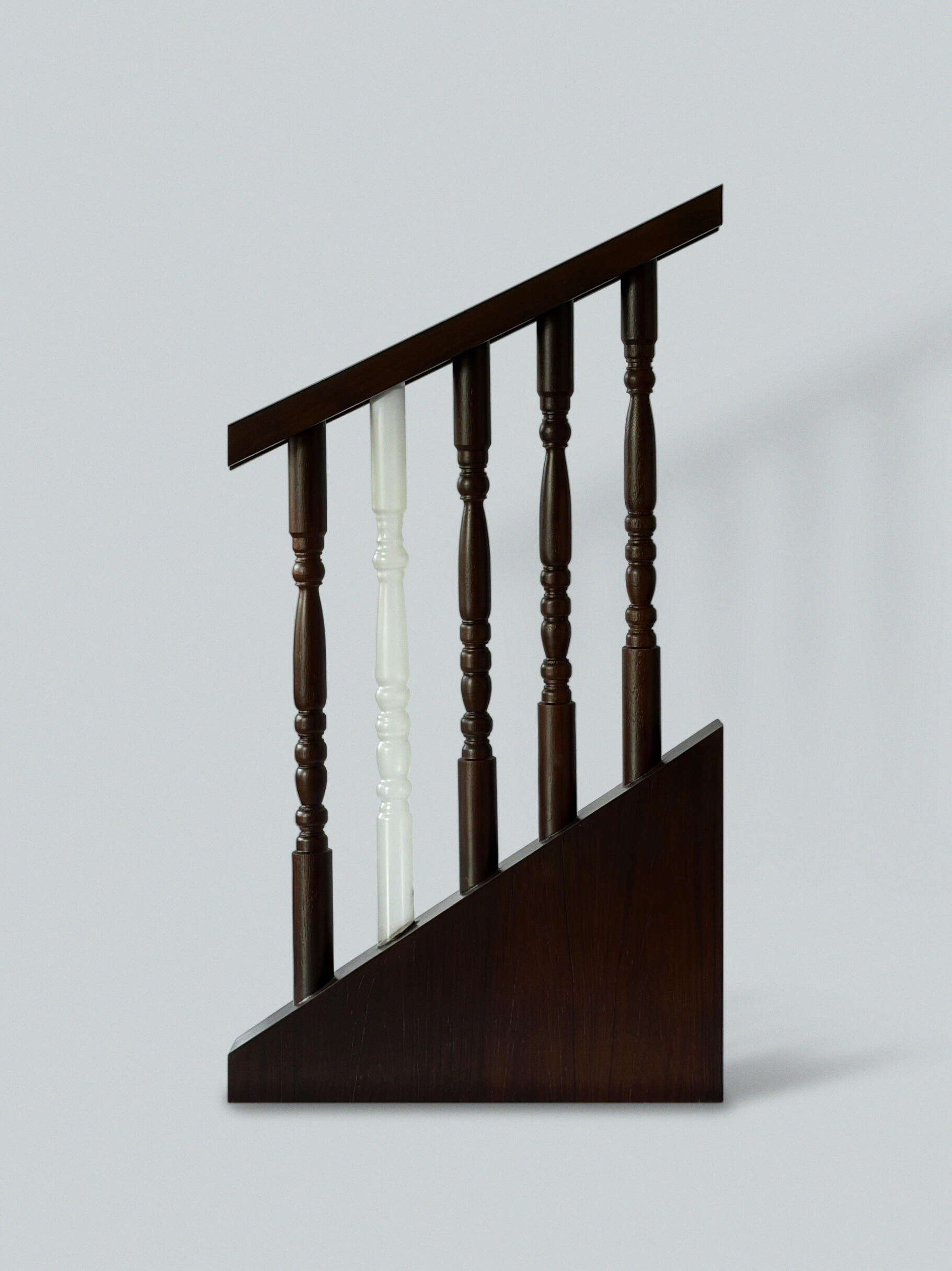
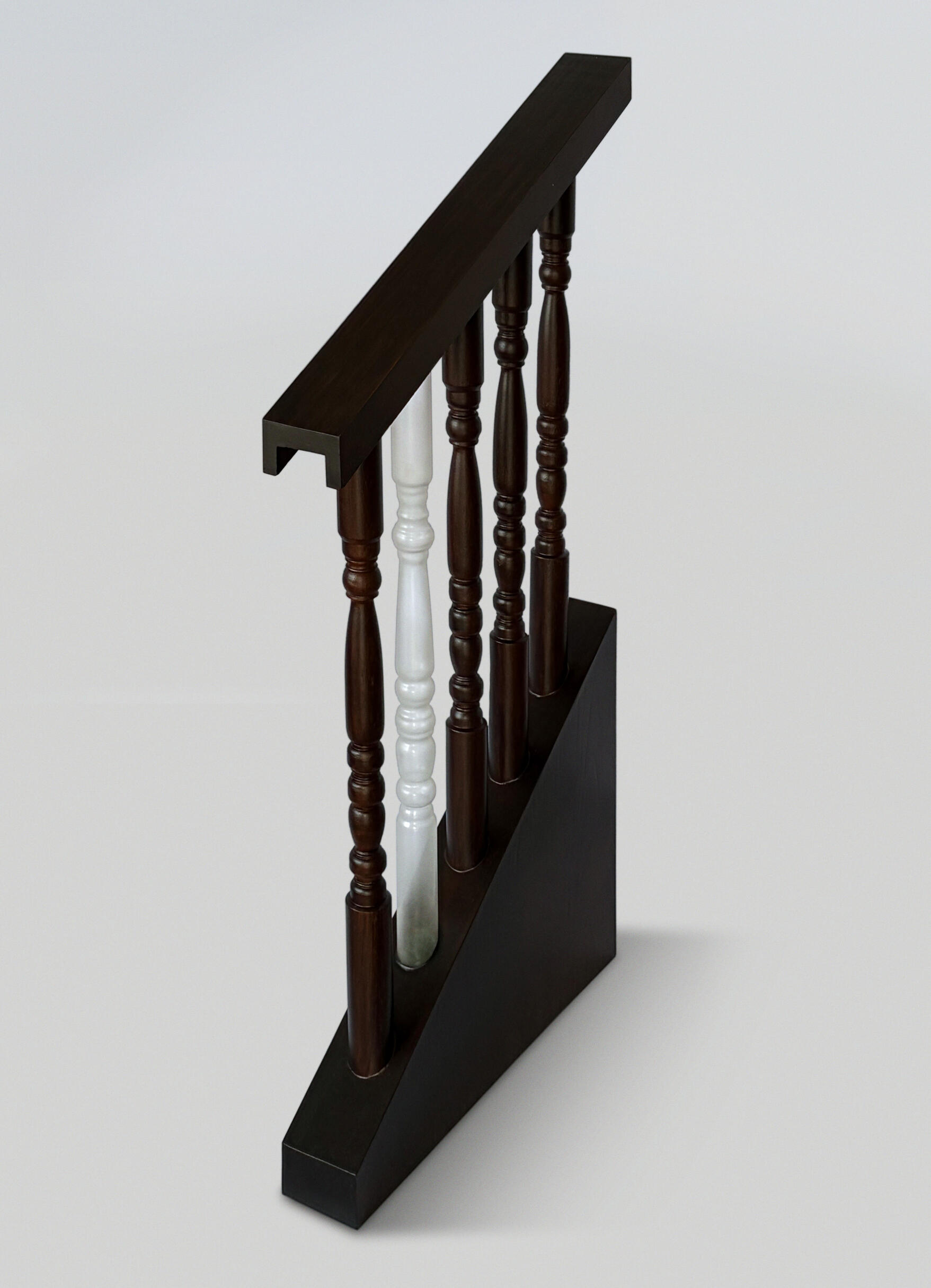
Baluster, 2026
In Place
75 × 10 × 88 cm
Borosilicate glass, teak wood, plywood
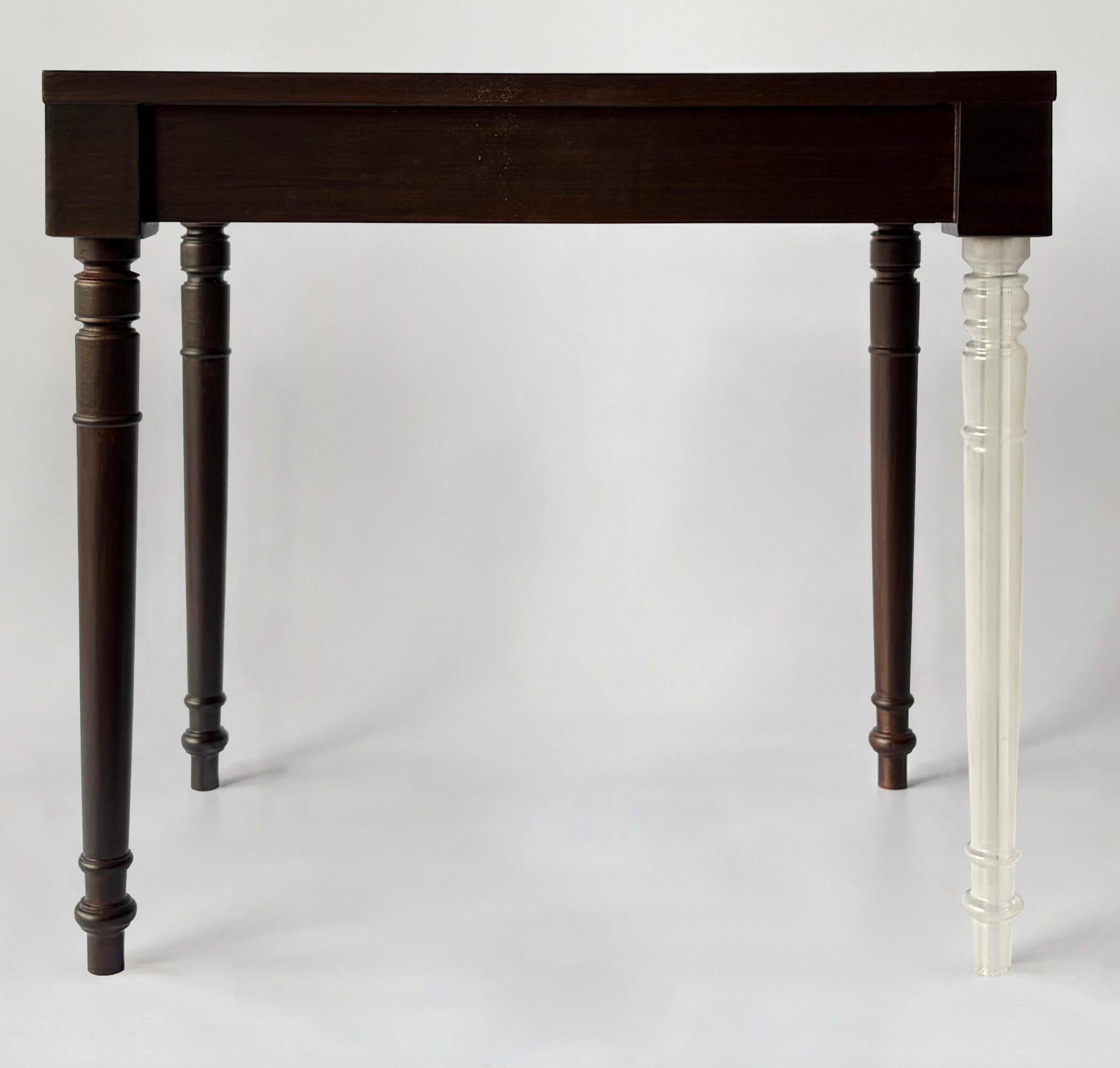
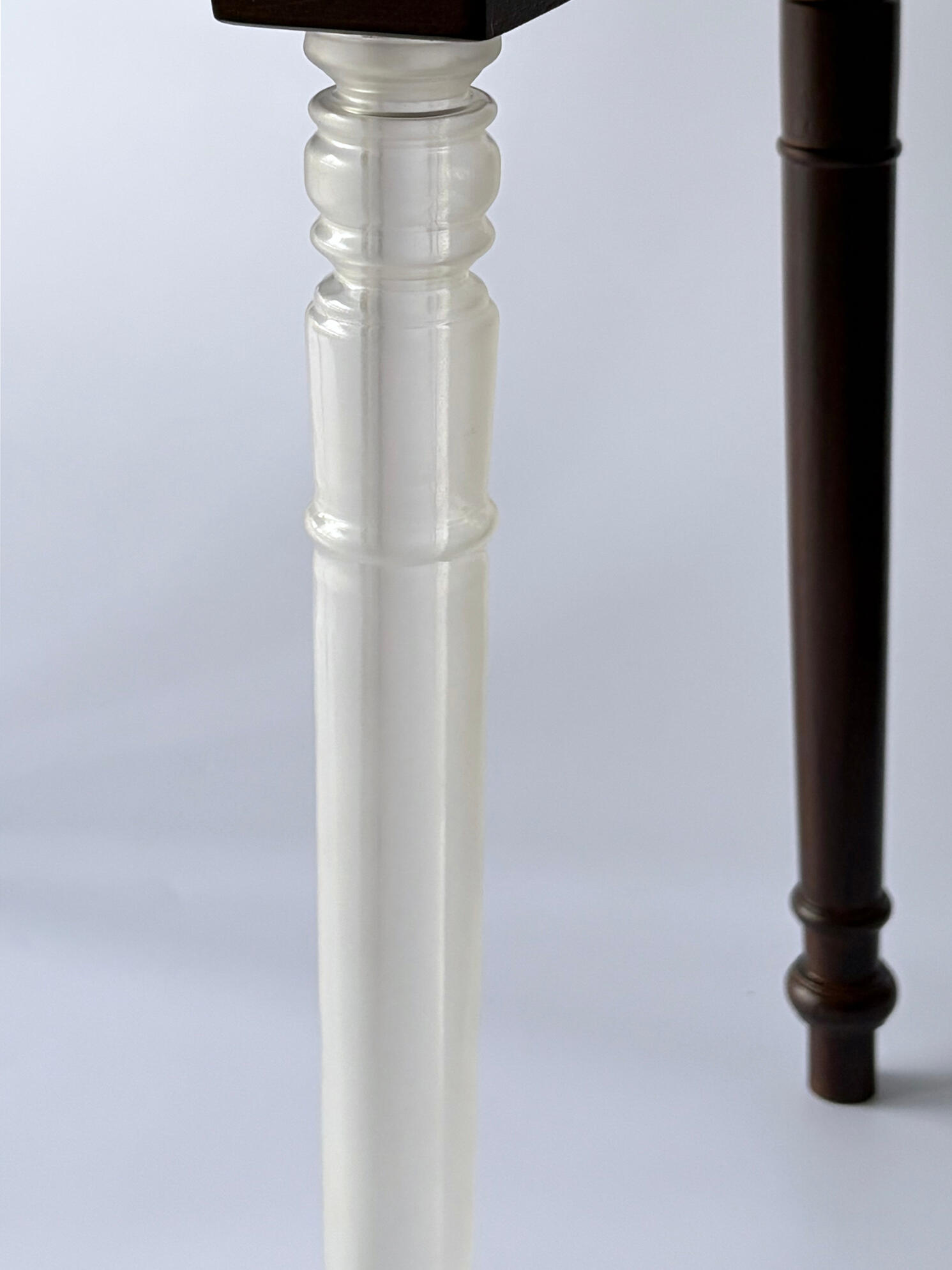
Table, 2026
In Place
67 × 47 × 64 cm
Borosilicate glass, teak wood, plywood
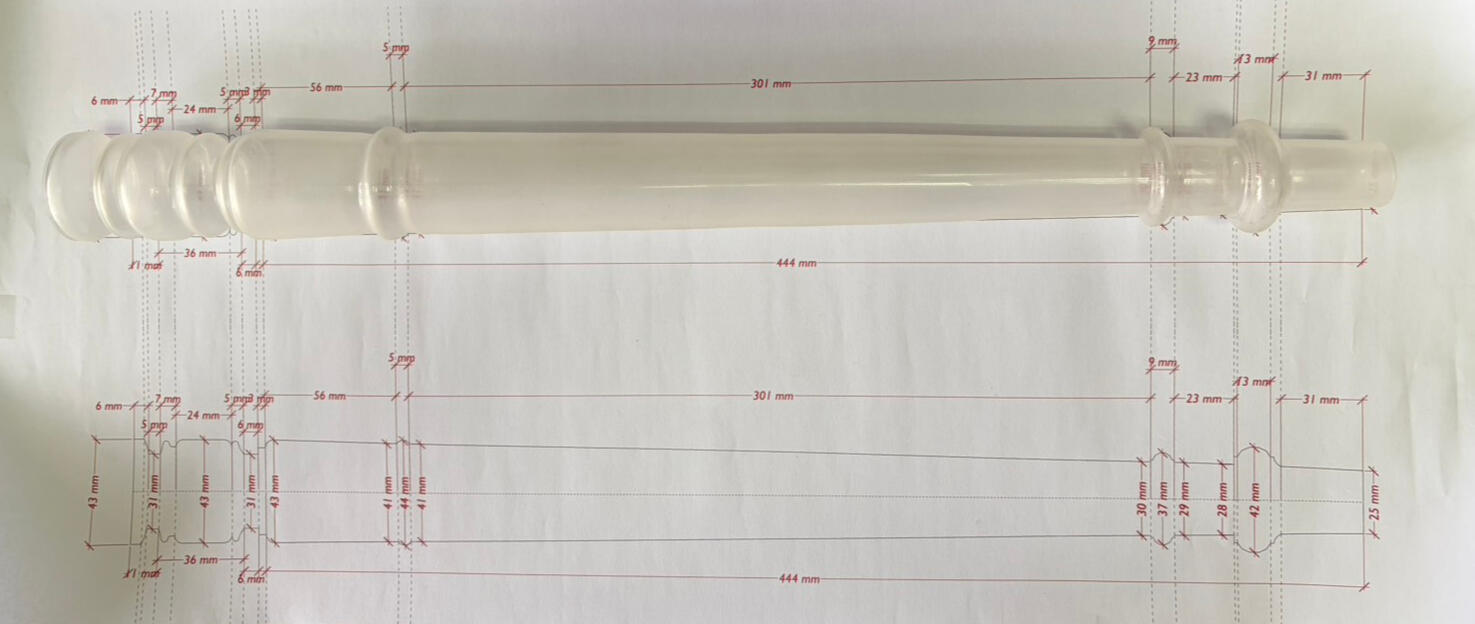
Borosilicate glass size comparison for carpentry production process
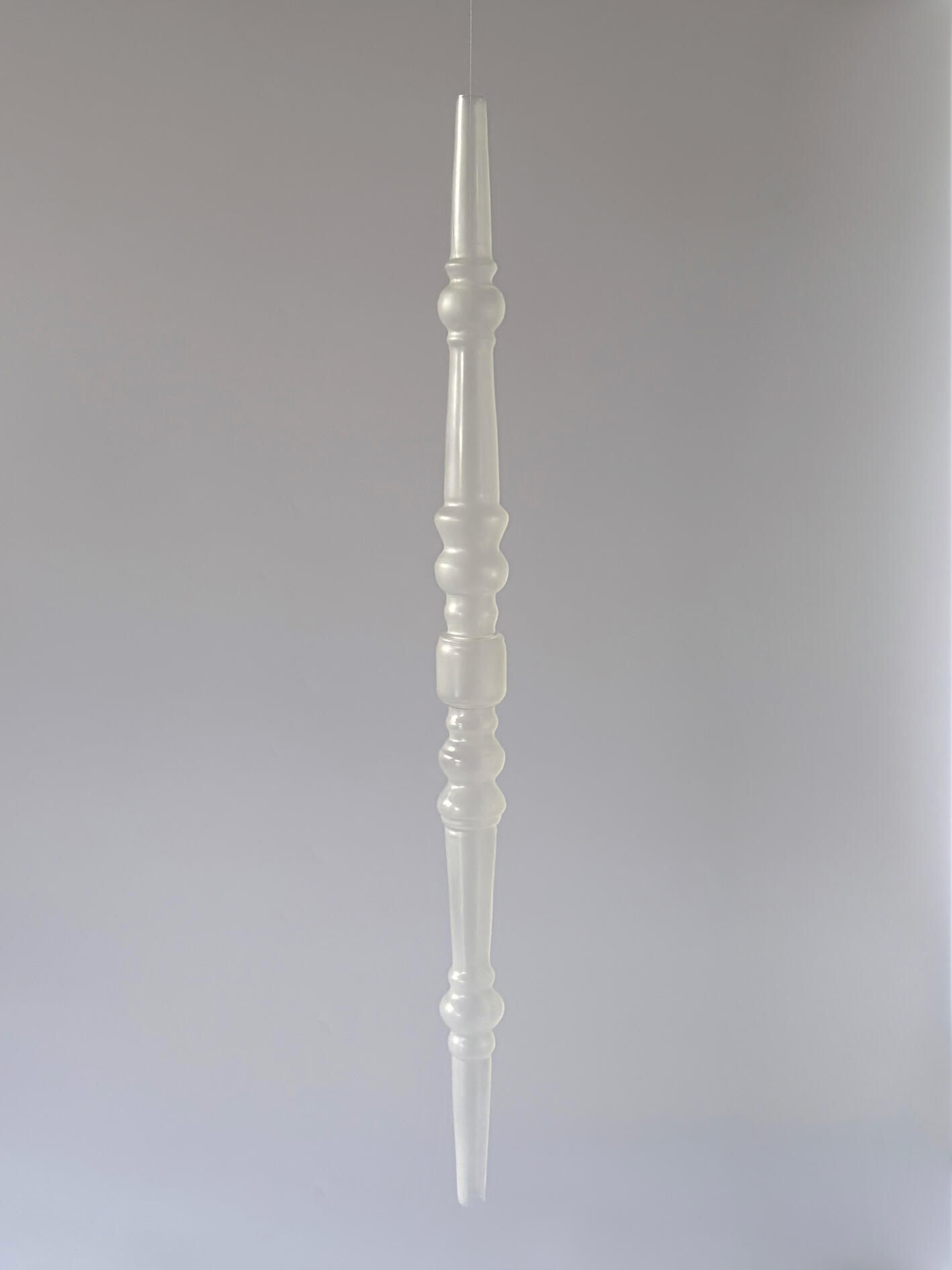
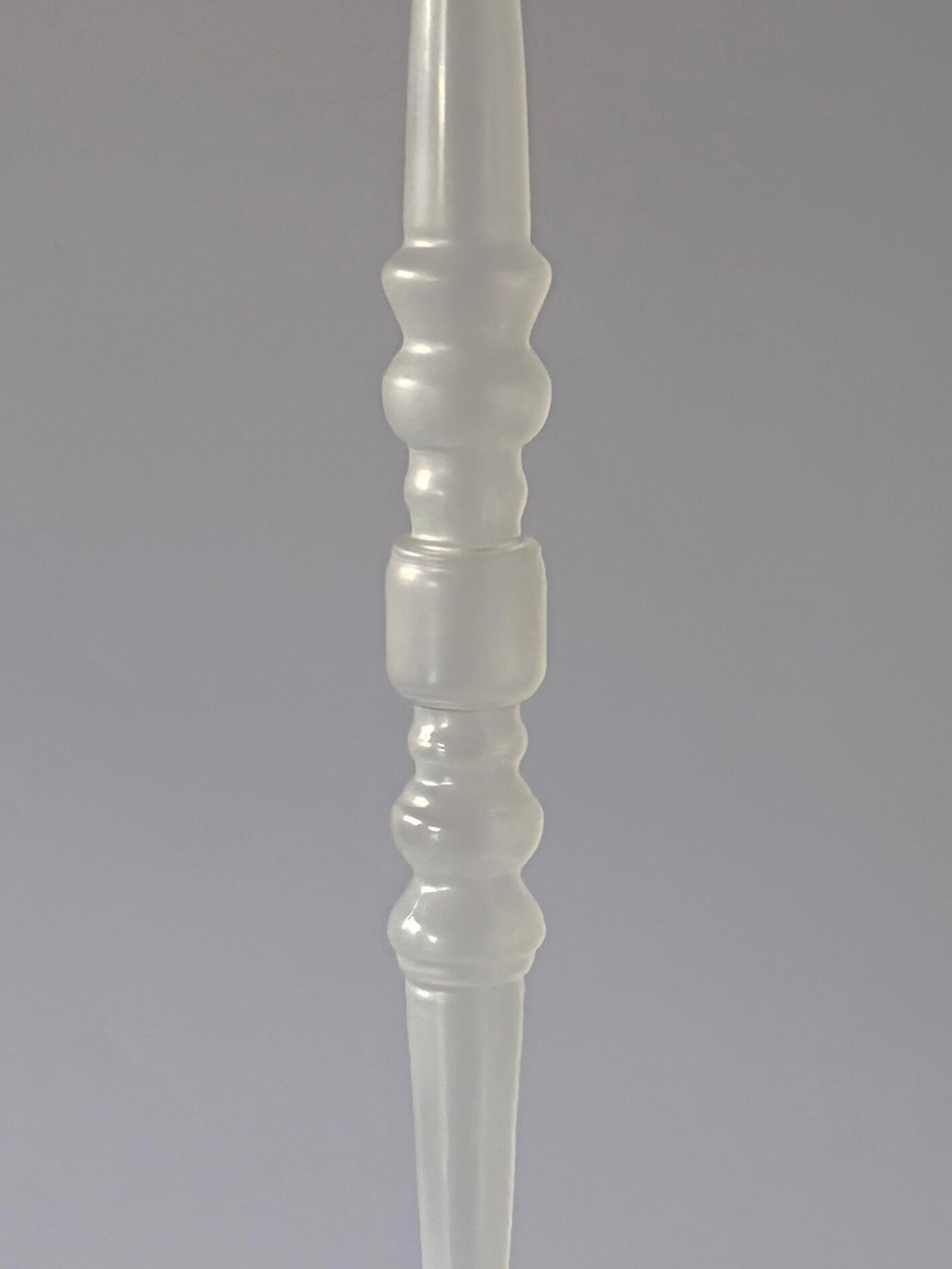
Place, 2026
5 × 5 × 78 cm.
Borosilicate glassA baluster from the apartment building where the artist established a home in Leipzig is replicated in glass.The work explores building stability as an immigrant in a new place.A foundation can hold, while remaining fragile.
Ground, 2025
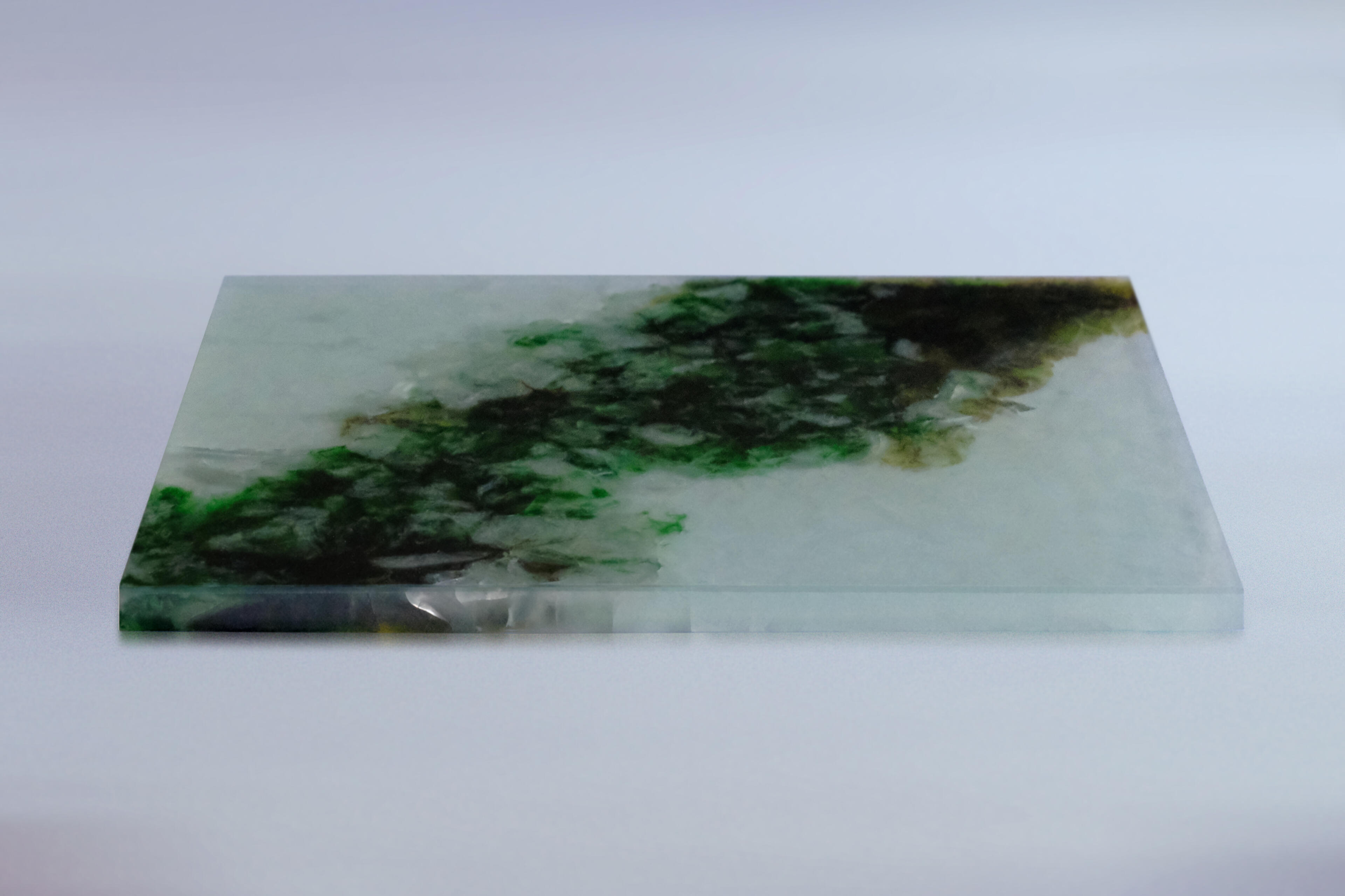
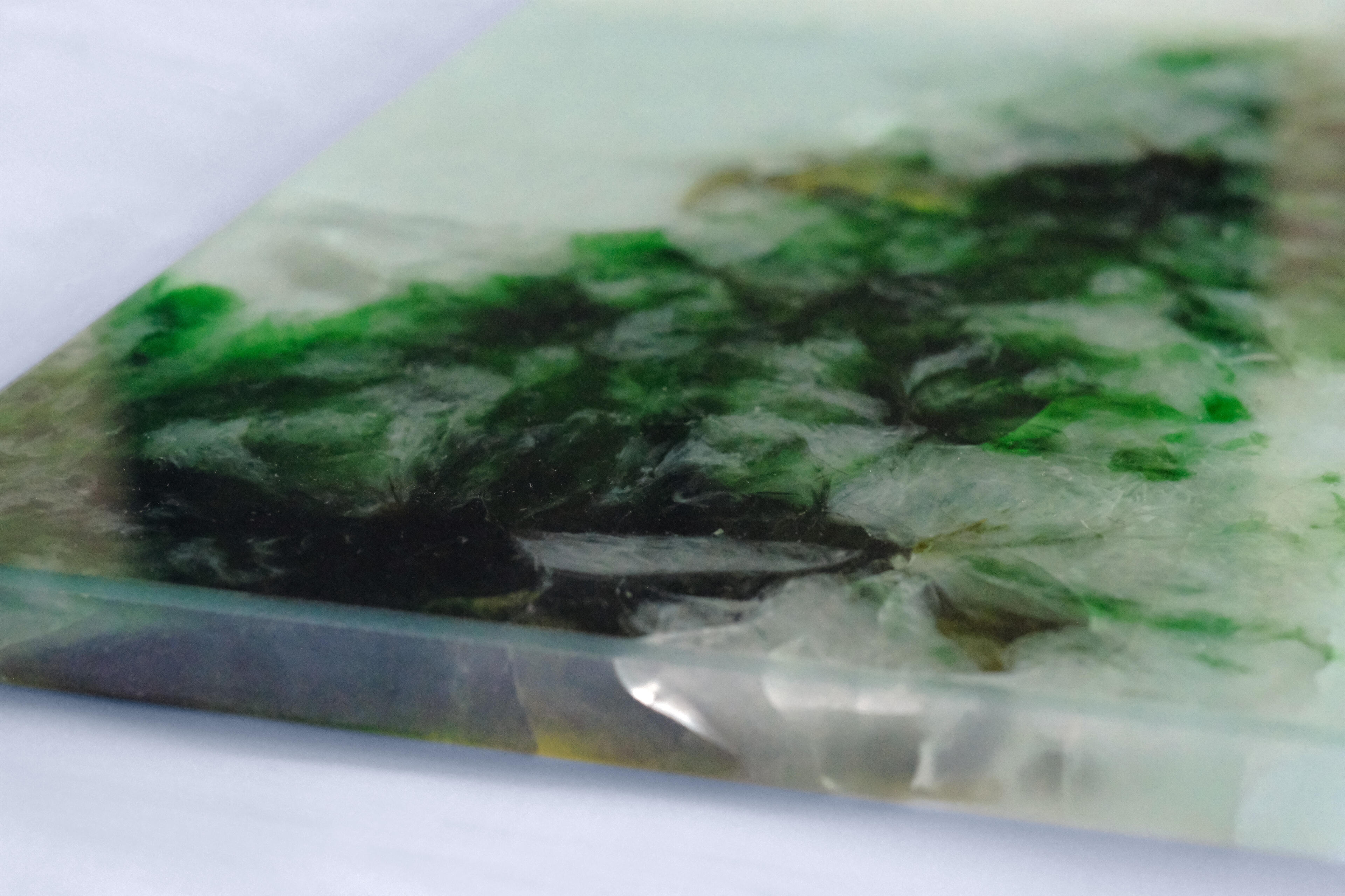
60 × 60 x 3 cm.
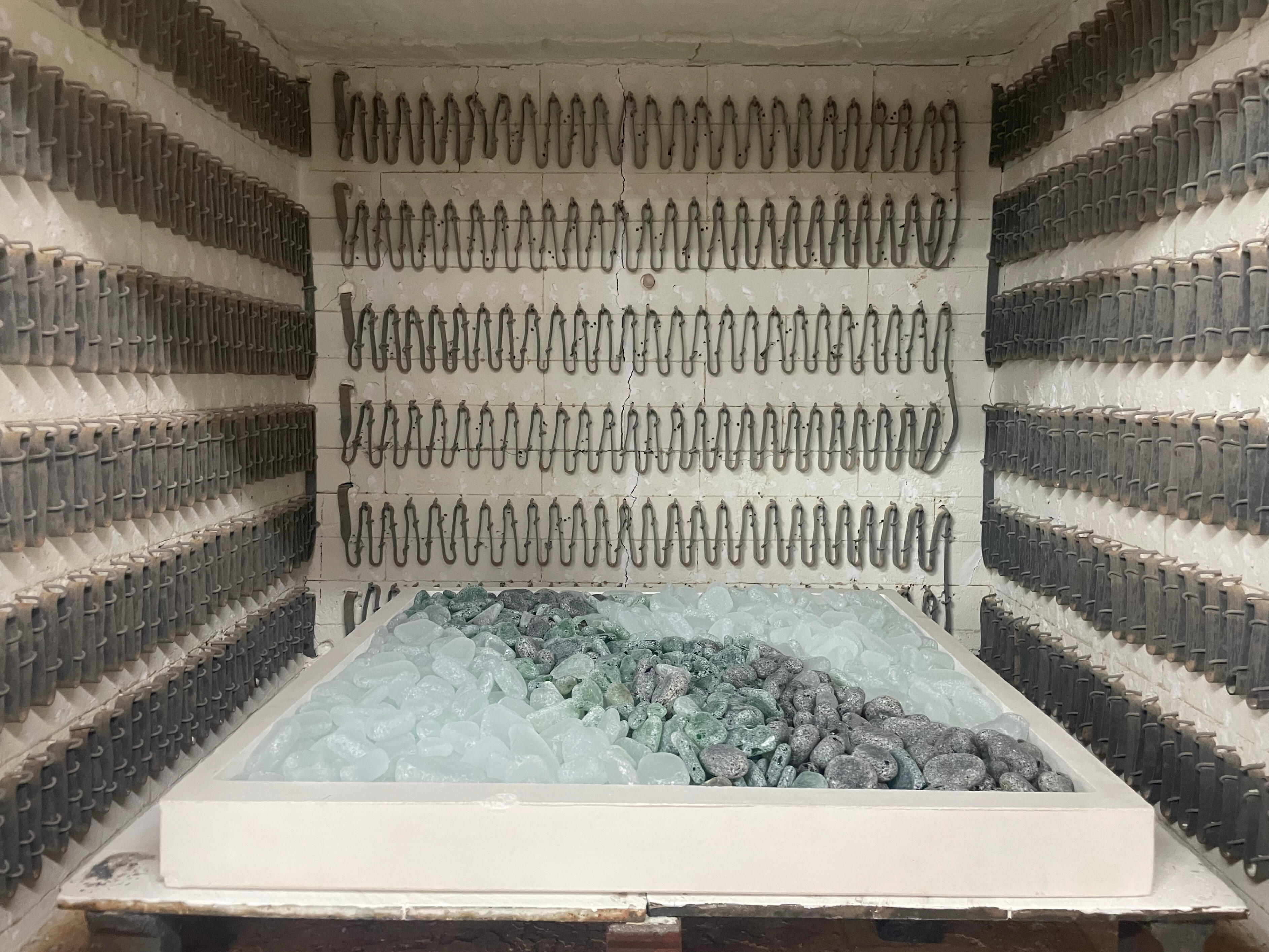
Discarded glassDiscarded glass in Bangkok, consisting of whole bottles and fragments left from broken bottles, is collected in two colours, white and green.The glass is processed into small fragments, layered and arranged before firing. Through repeated firing, the fragments fuse into a slab resembling natural marble. The final form emerges between arrangement and material movement.Marble is formed through heat, pressure and geological time. Ground uses heat to transform discarded glass. A discarded material becomes something that appears geological.
Through, 2025
26.7 × 39.7 × 6 cm and 42.7 × 39.7 × 6 cm.
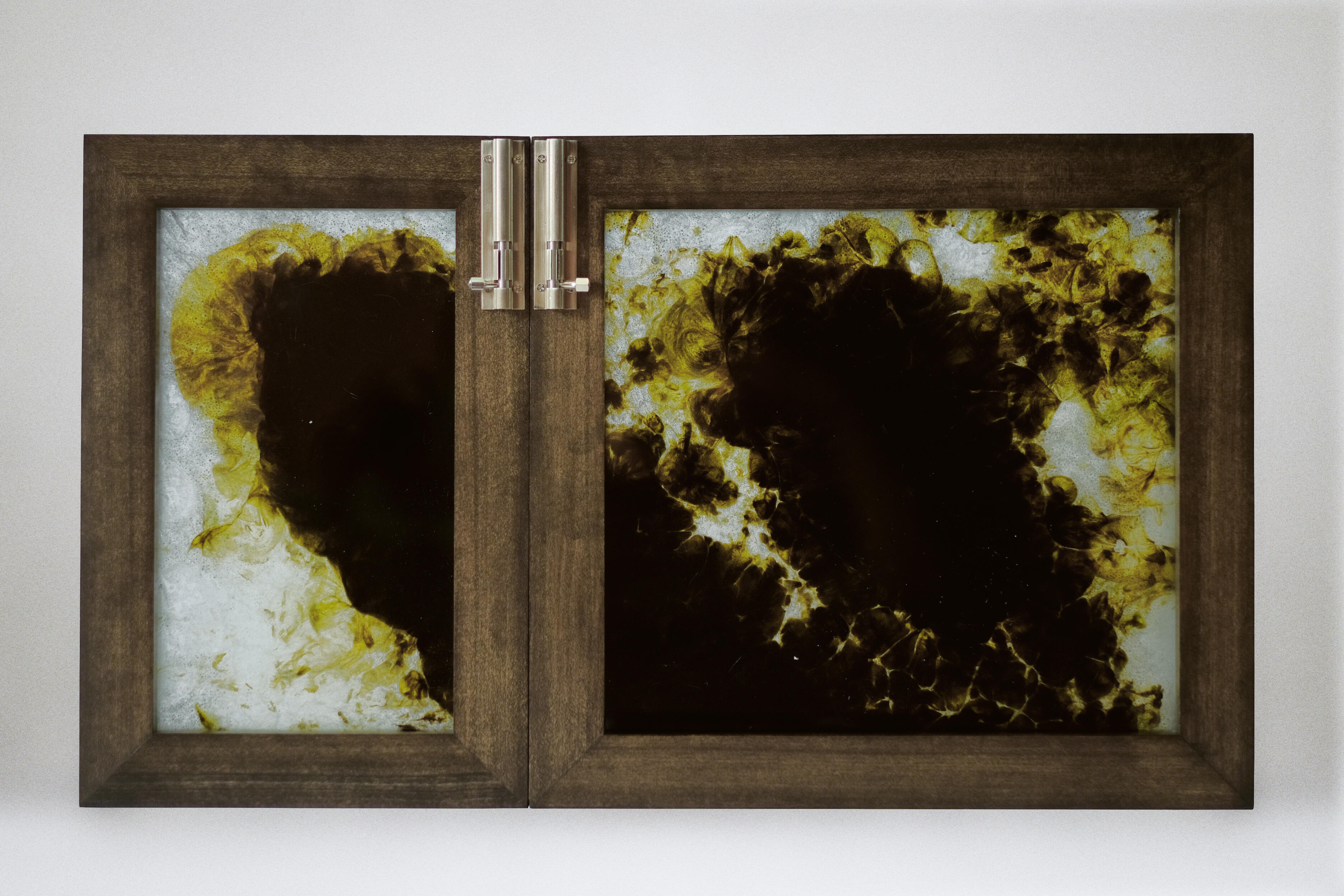
Discarded glass, wood, stainless steelDiscarded glass collected in Bangkok from various domestic sources is melted and reformed into a window. The glass contains traces from different domestic lives, carrying small fragments of the city and its accumulated histories.The window references a Thai domestic window, with two panels and a sliding stainless steel latch. Light passes through the glass, while the outside is obscured and a reflection appears on the surface.What remains becomes part of how we see.The window becomes a threshold between what has been and what is.
Nine Months Series, 2020-2023This series uses stone and water as elemental markers of time, shaped in parallel with the artist’s pregnancies. Each work documents a span of around nine months, reflecting on care, transformation, and the embodied perception of time. Through slow, continuous processes—whether the steady drip of water or the constant flow of a river—ordinary materials become vessels of endurance and change. The stones serve as living records of time, marked by both deliberate care and environmental forces. They stand as relics of transition, embodying endurance, nourishment, and the quiet but relentless movement of life.
Tia Skultantimayta, 2020-2021
7.1 x 5.3 x 1.5 cm
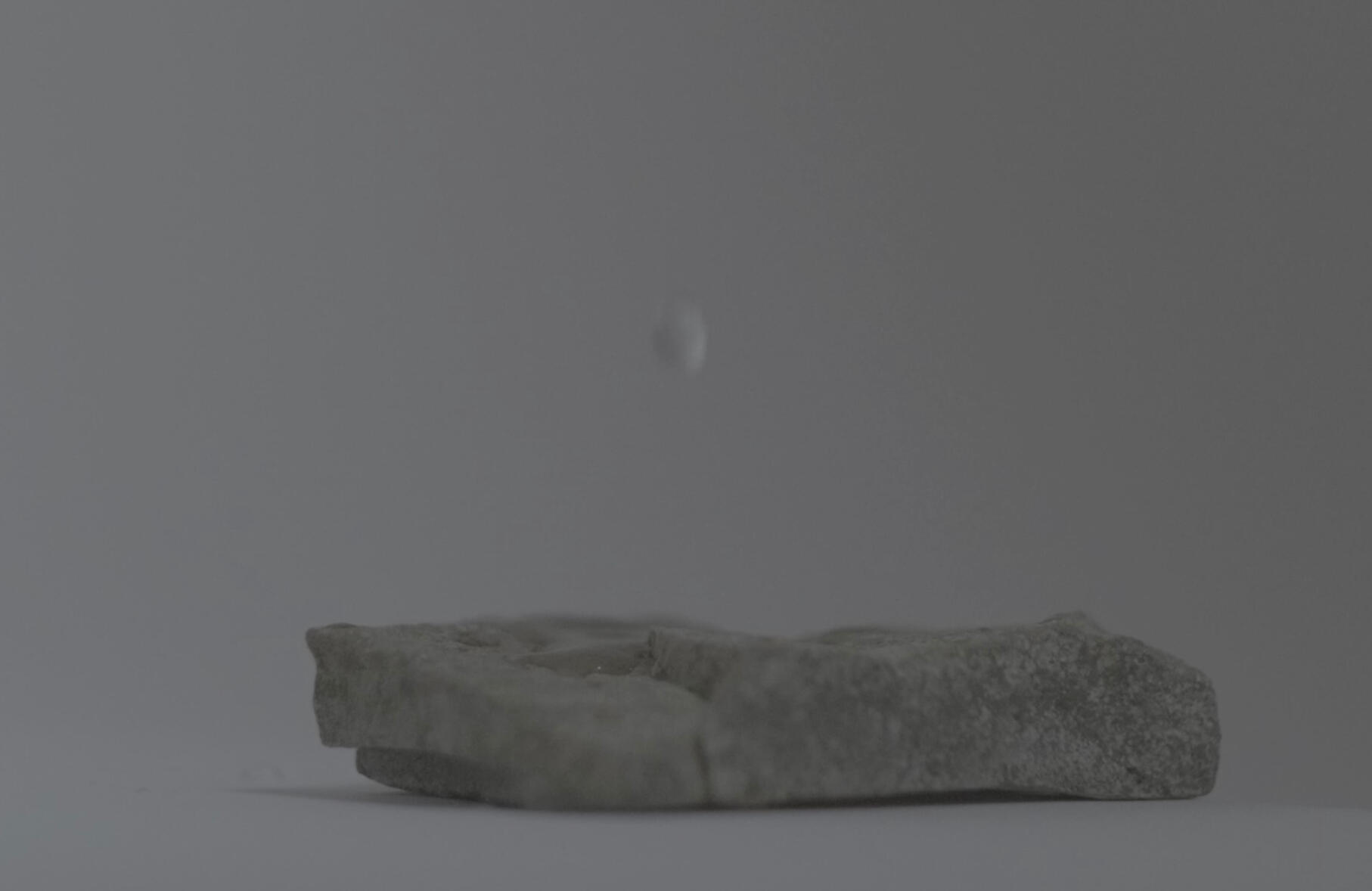
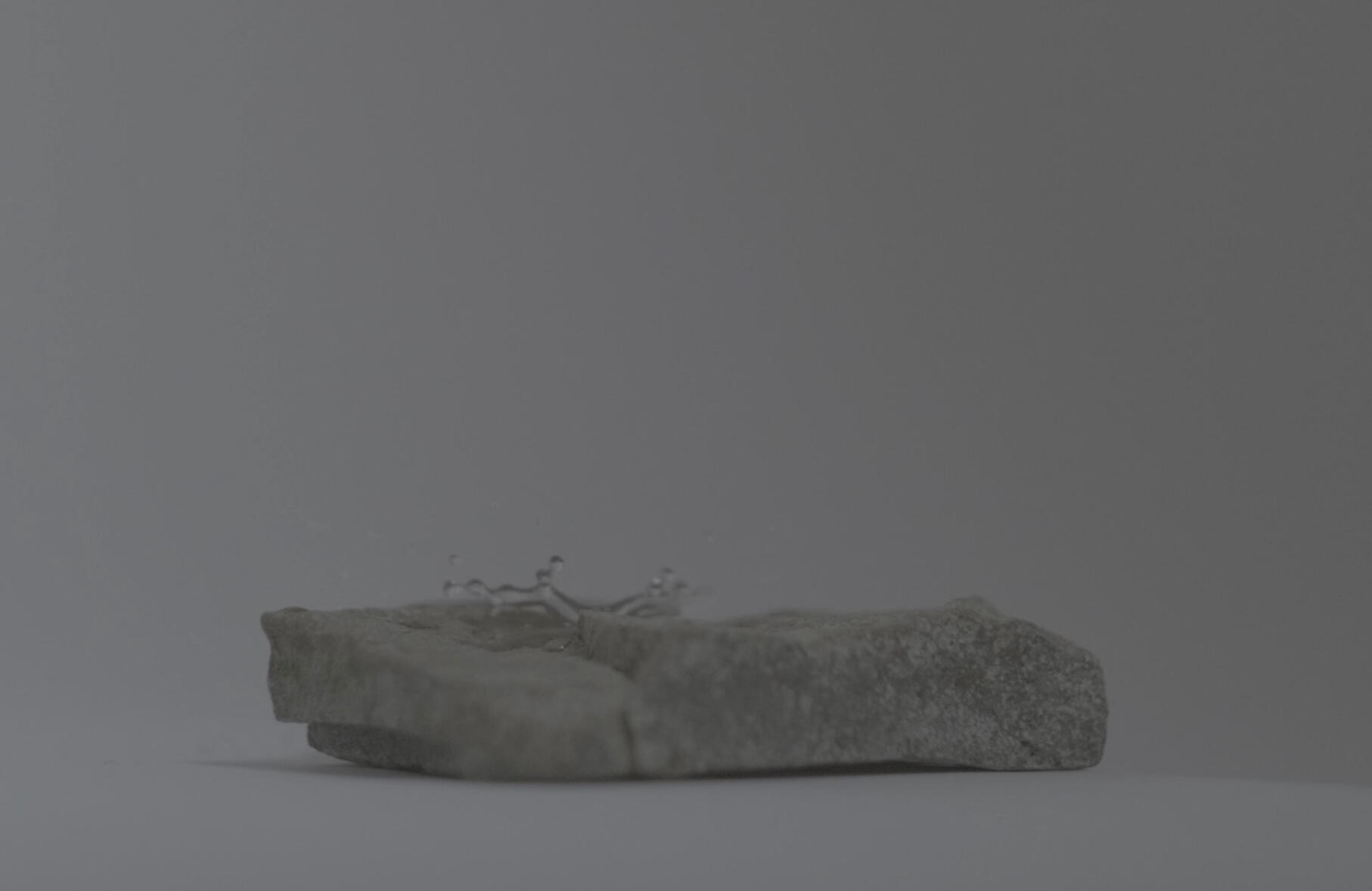
Stone, waterA stone from Weimar was shaped by a controlled rhythm of one water drop per second, sustained throughout the artist’s first pregnancy. The deliberate setup, using an intravenous system, mirrored a heightened state of attentiveness during this period of vigilance and anticipation. Each drop, ephemeral on its own, gradually inscribed the passage of time onto the stone’s surface, balancing permanence with transformation.
Ray Skultantimayta, 2022-2023
8 x 6.4 x 3 cm
Stone, waterThe second stone, placed in a Leipzig stream during the artist’s second pregnancy, was exposed to flowing water, weather, and seasonal cycles for eight months and three weeks. The stone’s surface bears traces of these encounters, erosion, deposition, and subtle shifts, preserving a record of natural forces over time. The work echoes the artist’s steady experience of pregnancy, in tune with the continuous rhythm of the river.
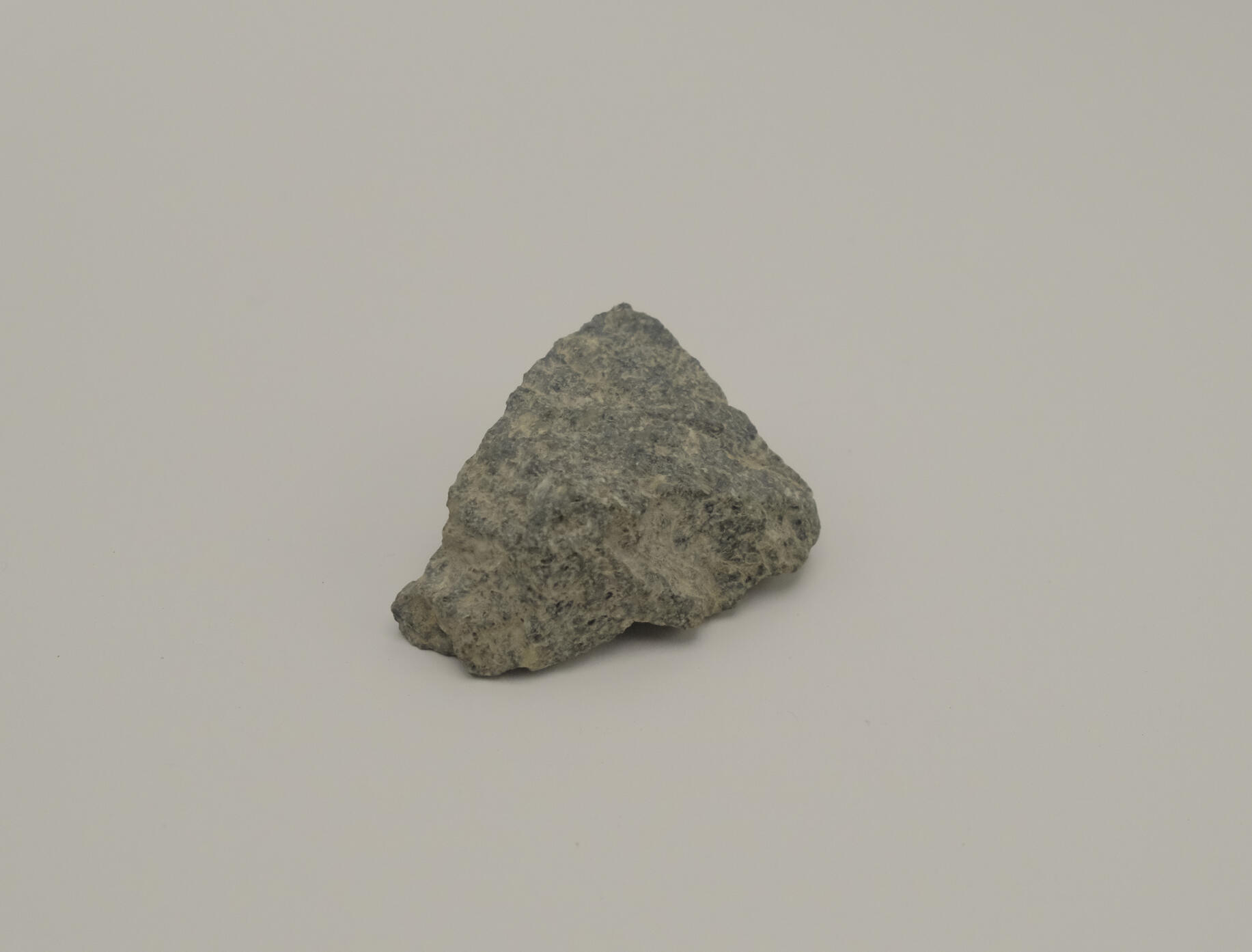
The Tower Hears the People Move and It Trembles, 2021
Dimensions variable
Site-specific installation
Glass bowls, waterInstalled in an empty room of the former Stasi headquarters in Leipzig, the work reflects on the surveillance culture of the German Democratic Republic (GDR), which once recorded citizens’ comings and goings, encounters, and correspondence. Everyday life was tallied into files, transforming personal moments into data. The installation stands in remembrance of those whose lives were monitored.Twenty-four second-hand glass bowls, once used daily in the homes of Leipzig residents and filled to the brim with water, are arranged in both stacked tiers and solitary vessels, they suggest both domestic intimacy and monumental architecture.The transparent structures appear to float, their surfaces taut with water. Some resemble fragile towers, while others form isolated pools. As viewers move through the room, the water subtly vibrates with the shifting floor and air currents. The bowls become sensitive “instruments of hearing,” resonating with the presence of bodies in space. Visitors may sense the trembling echoes of rebellion, evoking the fragile tension between silence and resistance.
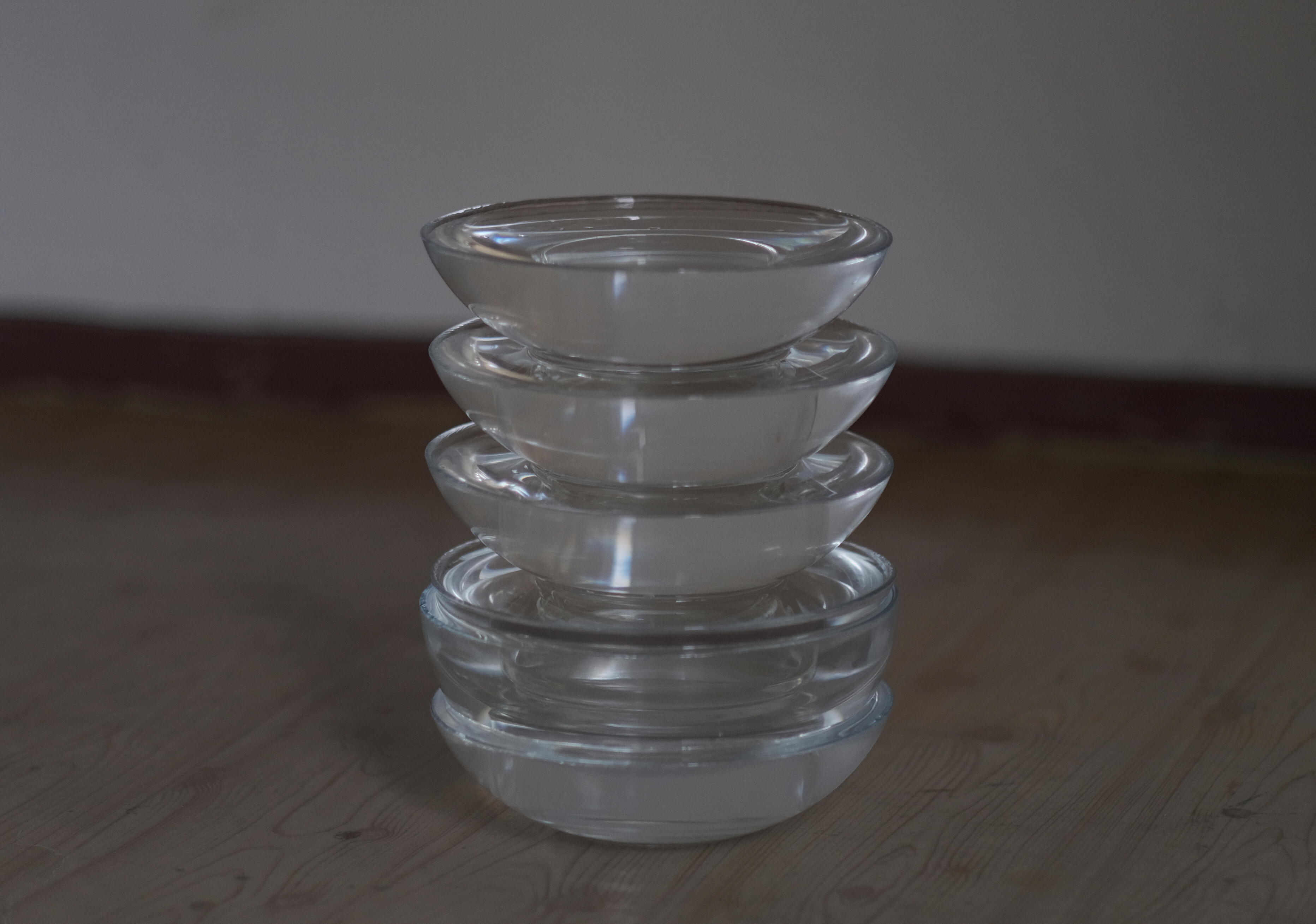
Weight of an Anthem, 2020
Video, color; 1 min.Weight of an Anthem presents the visual of a concrete block submerged in water, anchored firmly by gravity yet transformed by its surroundings. Beneath the water's surface, the block, heavy and immobile in essence, takes on an unexpected fluidity. Its form ripples and distorts, seeming weightless as if drifting on air currents, suspended in flight, its edges fluttering like windblown fabric.The work juxtaposes solidity and motion, permanence and impermanence. The concrete block—symbol of strength, structure, and gravity—is reimagined as something dynamic and ephemeral, challenging our perception of mass and movement. Through this interplay, Weight of an Anthem invites reflection on how context can redefine even the heaviest of symbols, evoking questions of burden, resilience, and transformation.
bau เบา, 2020
Site-Specific Performance
Stephane-Hessel Platz, Bauhaus Museum Weimarbau เบา is a public art project by Titirat Skultantimayta and Sorn Patharakorn, performed at Stephane-Hessel Platz, in front of the Bauhaus Museum Weimar. The work consists of a persistent and meditative act: writing with water drawn from the remaining Asbach river.The Asbach, a river in Weimar, was buried underground in 1936 by the National Socialists during the construction of the Gauforum, a monumental architectural complex representing their oppressive ideology. Part of the river now flows beneath the Bauhaus Museum Weimar, itself a testament to the modernist ideals of creativity and innovation that stood in stark opposition to the totalitarianism of its time.Set against this layered historical backdrop, bau เบา introduces a transient monument—an ephemeral act of writing that gently resurfaces the Asbach. The performance juxtaposes the permanence of the monumental structures surrounding the site with the impermanence of water, reflecting on the contradictions of history and the cyclical nature of human ideals.The words written with water hold dual meanings, pronounced the same in both German and Thai yet carrying distinct definitions: Bau /IPA: baʊ̯/ (German)
(Noun m.) building, construction.
(Verb: Imperative) build, construct, erect, to build. เบา /RTGS: bao/ (Thai)
(Adv.) softly; gently.
(Adj.) soft; gentle.
(Adj.) light; not heavy (of weight).Through this linguistic interplay, the performance bridges two languages and cultures, connecting histories through action and meaning. The act of writing—soft, transient, and performed with care—contrasts sharply with the monumental architecture and harsh history of the site.By evoking the Asbach river, long buried yet still flowing beneath the surface, bau เบา touches on themes of erasure, memory, and resilience. It transforms a space marked by conflicting ideologies into one of quiet reflection, inviting viewers to consider the weight of history and the possibility of renewal through gentle, deliberate action.
Fallen Cycle, 2019
Dimensions variable
Mixed-media installation, in collaboration with Sorn Patharakorn
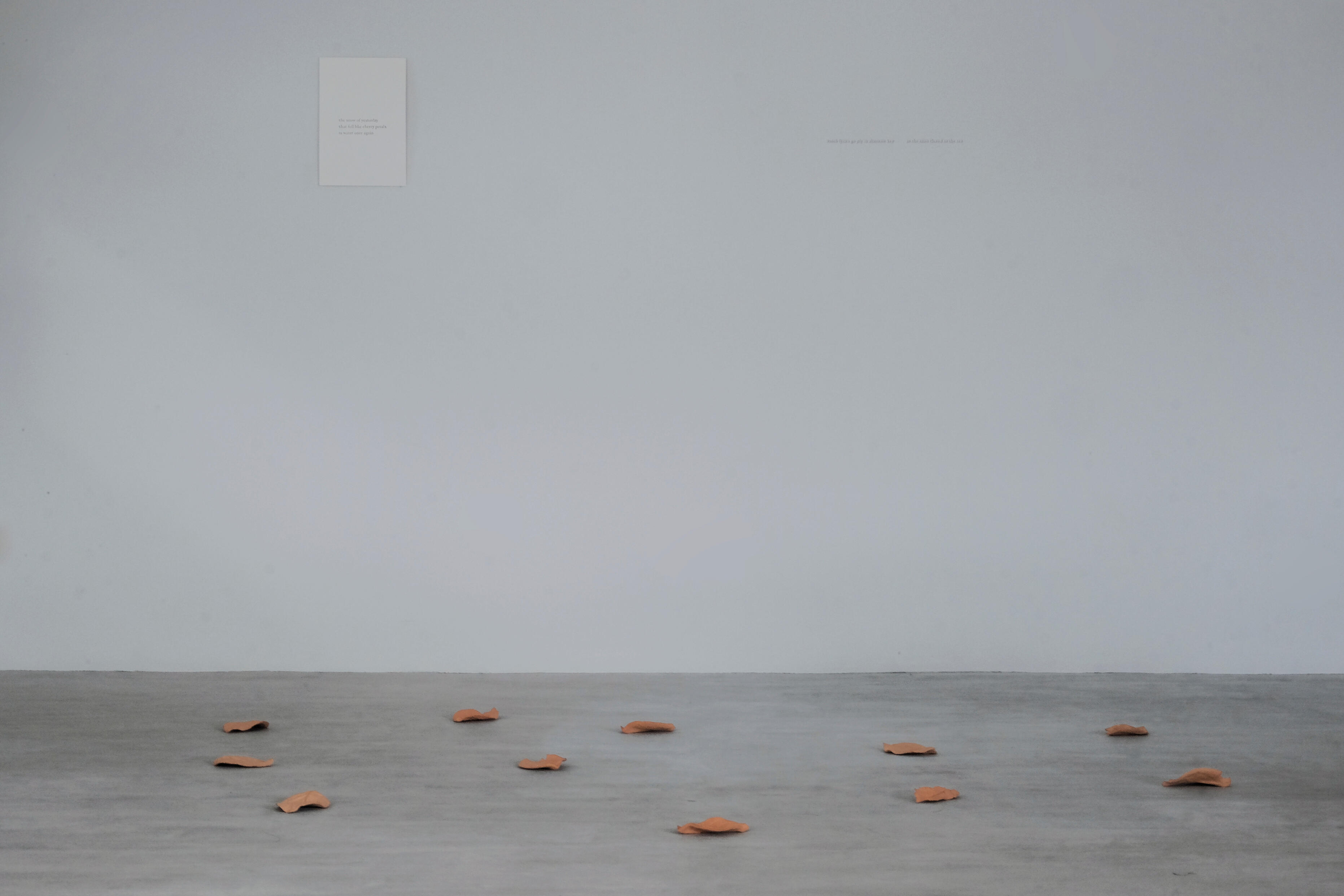
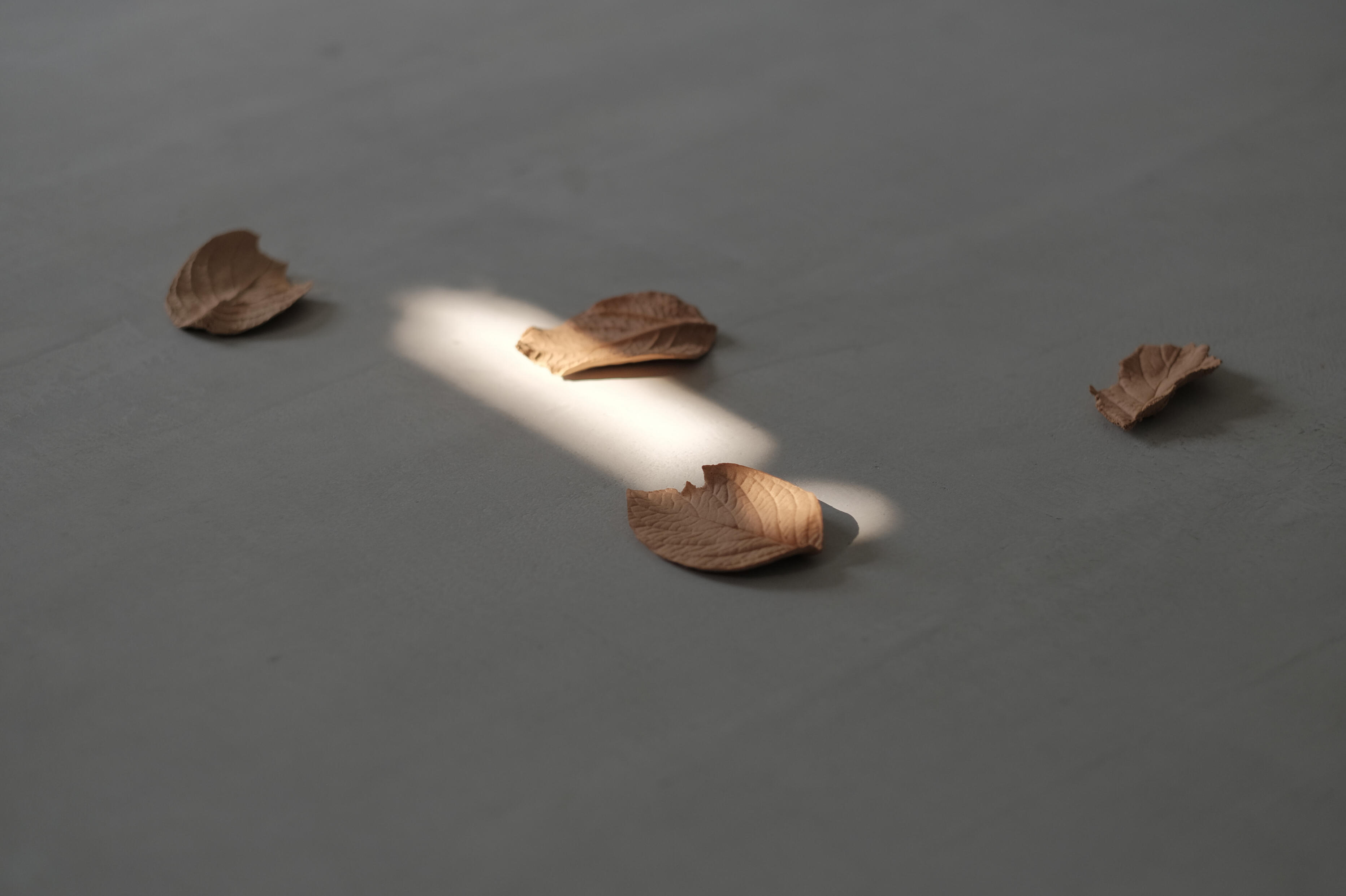
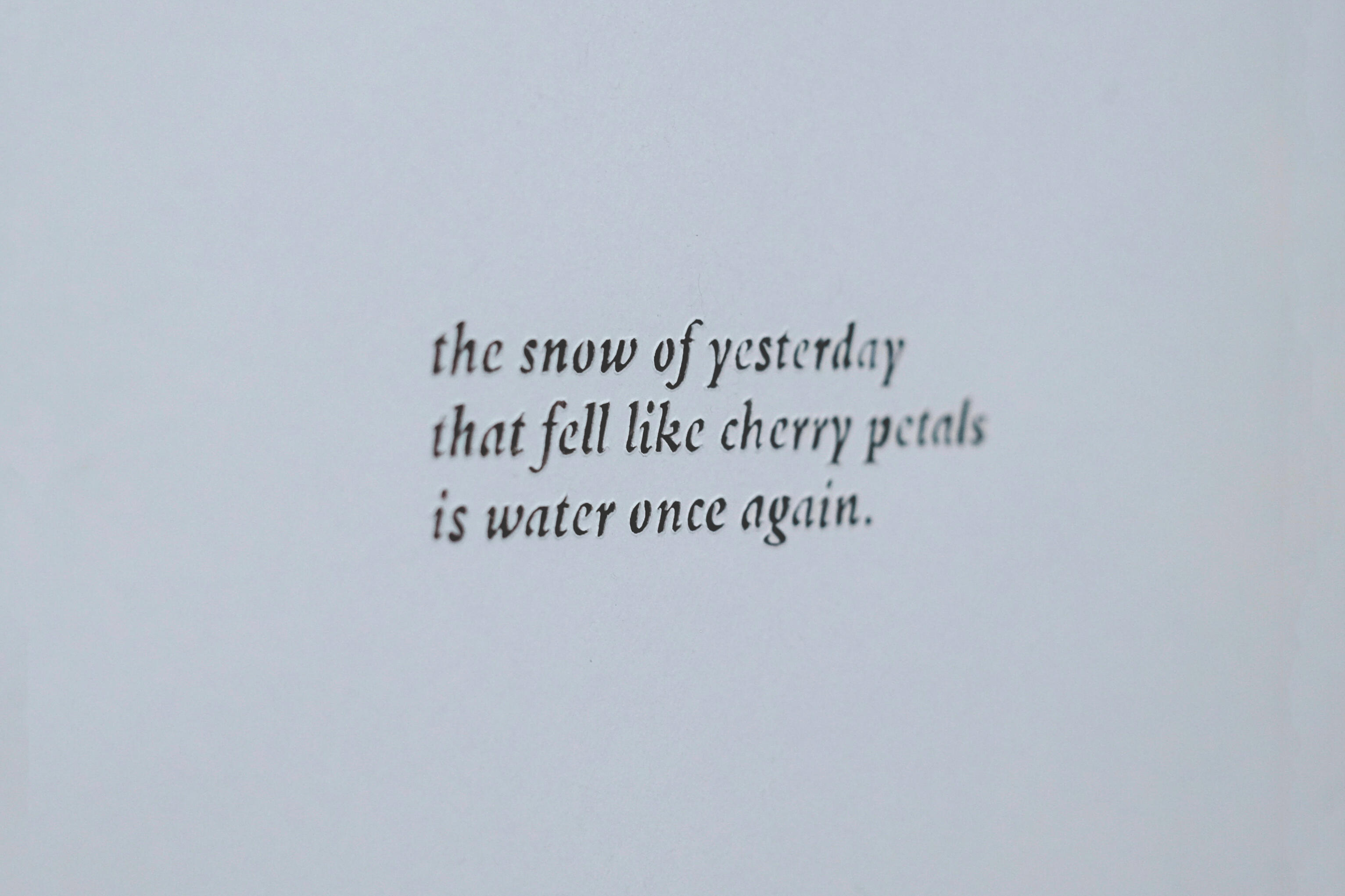
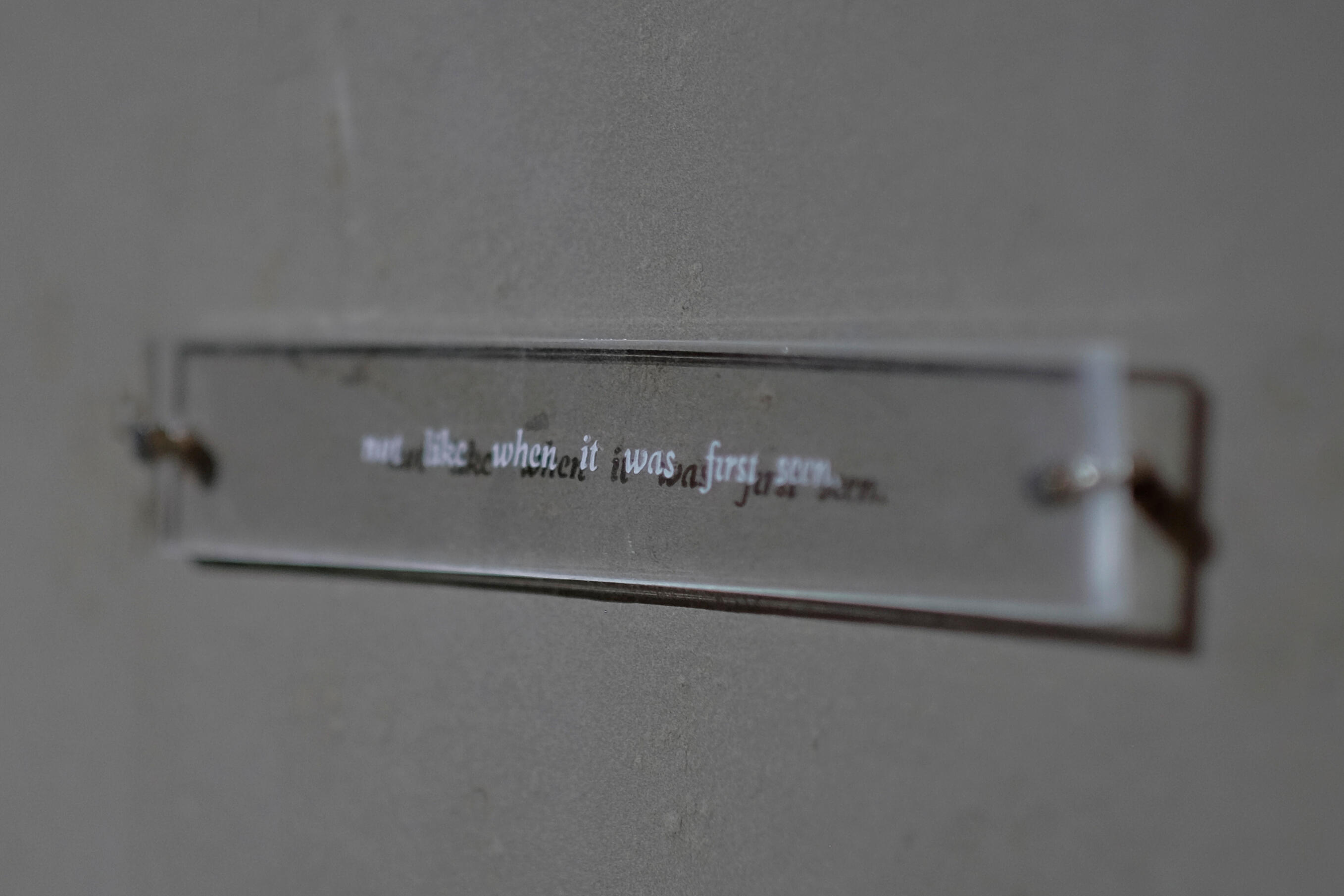
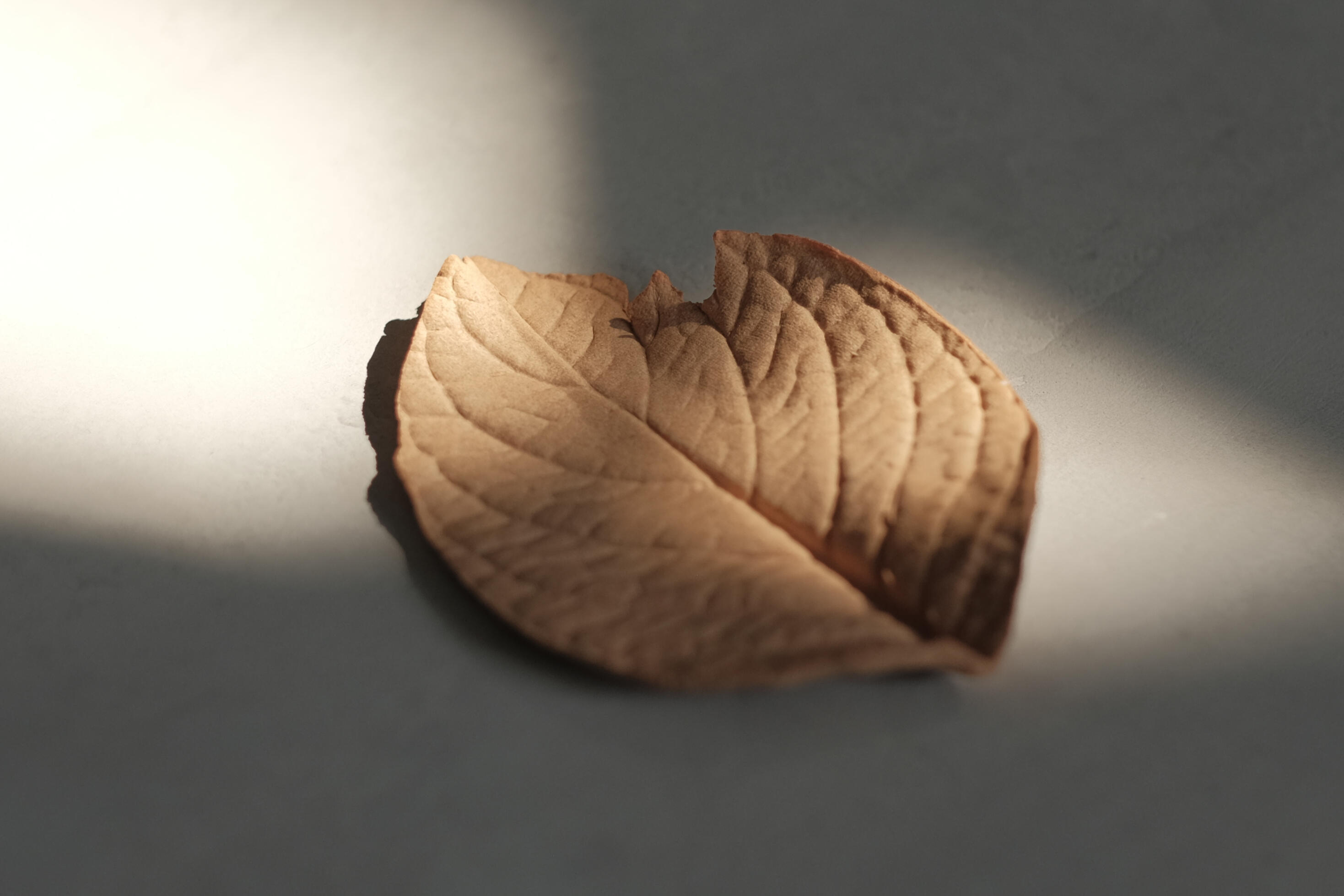
Terracotta, PaperFallen Cycle is a spatial art project consist of 2 pieces of work, Fallen Cycle (Clay) and Fallen Cycle (Paper). The two works are installed in the same space as they are meant to be in the same conversation.Fallen Cycle (Clay) consists of ceramic pieces resembling dry leaves scattering on the gallery floor. These leaves out of natural context point to the natural cycle as observed by human. The leaves sculpture of Fallen Cycle (Clay) on the gallery floor act partly as an emulsifier harmonising the space in the attic art space to the outside. Although they appear similar, the leaves in nature are part of natural cycle, the leaves on the street need to be swept, and the leaves in the gallery setting become something else. Not only the context of leaves makes them different things, but also encourage different interactions with them.Fallen Cycle (Paper) is a page of poetry on the wall, with the alphabets carved out of the page. It is a translation from the last poem written by a zen monk named Gozan in 1789.
The page material, perforated with the absence of the poem, is juxtaposed by another text composed from the letters that used to be homogeneous with the very same page.
The original text is:
“ the snow of yesterday
that fell like cherry petals
is water once again. ”And the rearranged text is:
“ day later
coy path echo
grey leaf alters
not like when it was first seen ”
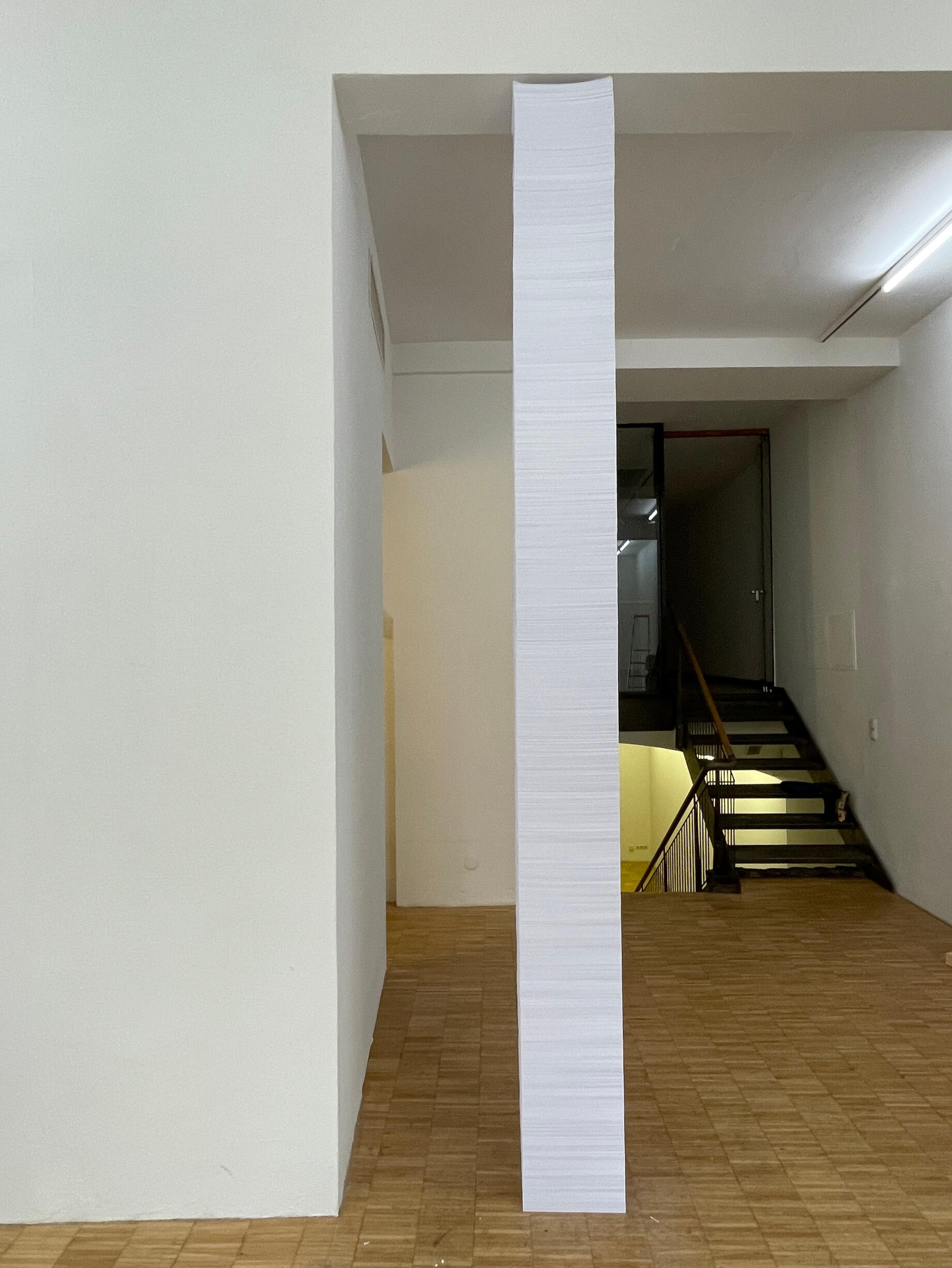
Bearing Lightness, 2018
26.7 × 39.7 × 6 cm and 42.7 × 39.7 × 6 cm.
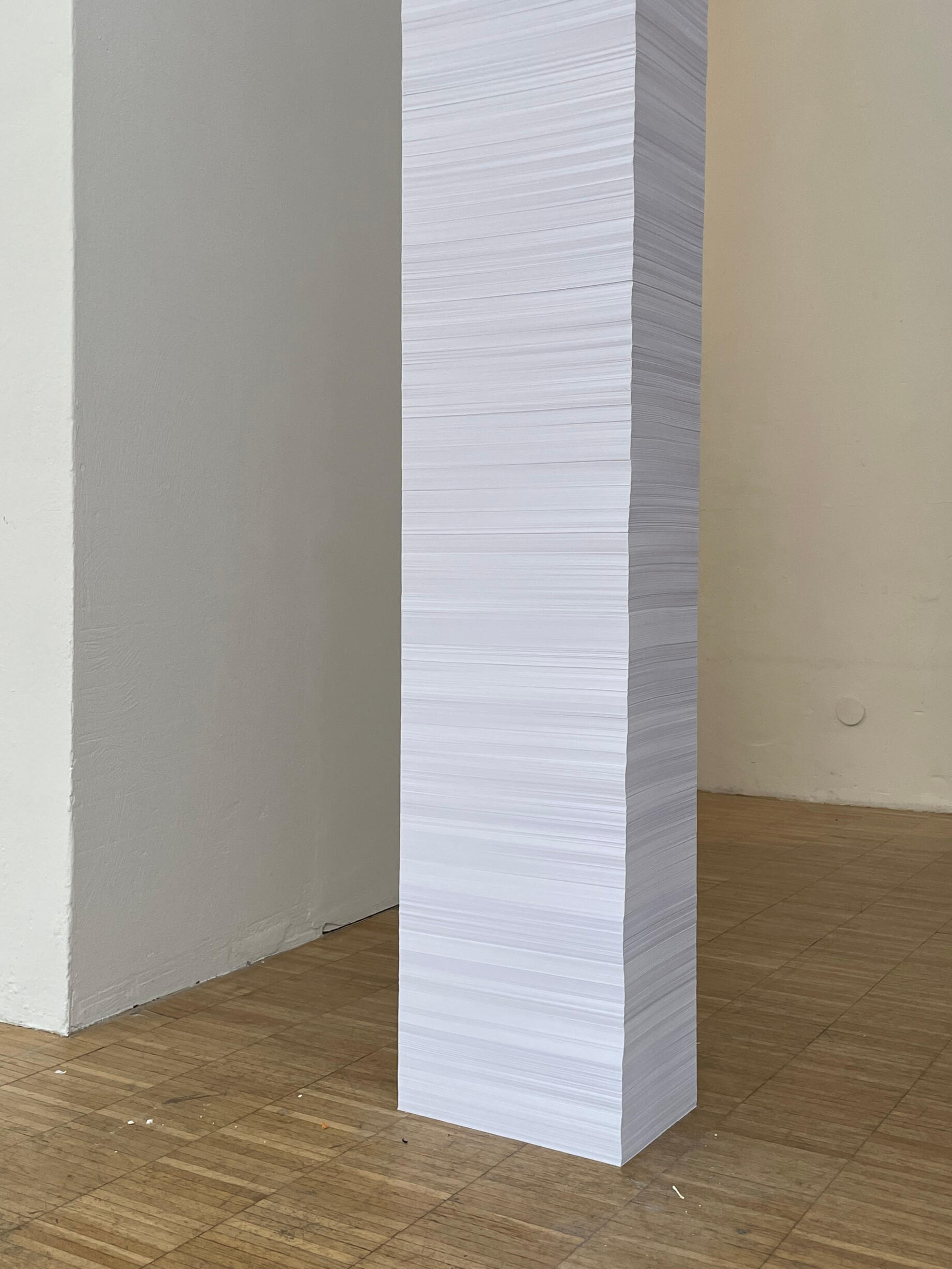
Paper sculpture, in collaboration with Sorn Patharakornpaper thickness, virtually dimensionless
solid structure, pillar
delicate integrity
standardised photocopy paper
collective significance, days to life, individuals to society[Text by: Kubaparis below]Skultan and Patharakorn's site-specific installation Bearing Lightness (2018/2022), composed of approximately 25,000 sheets of A4 paper, plays with the architectural element of the sturdy column on the one hand, and with questions of individual and mass on the other. While a single sheet of paper is an almost two-dimensional object with no perceptible weight, in a stack it becomes a uniform block and a cumbersome object. However, the paper is more unruly than it appears at first glance; stability and order are only feigned here. The installation is dependent on a supporting framework, without which it could disintegrate into a chaos of thousands of pieces at the slightest touch or breeze.
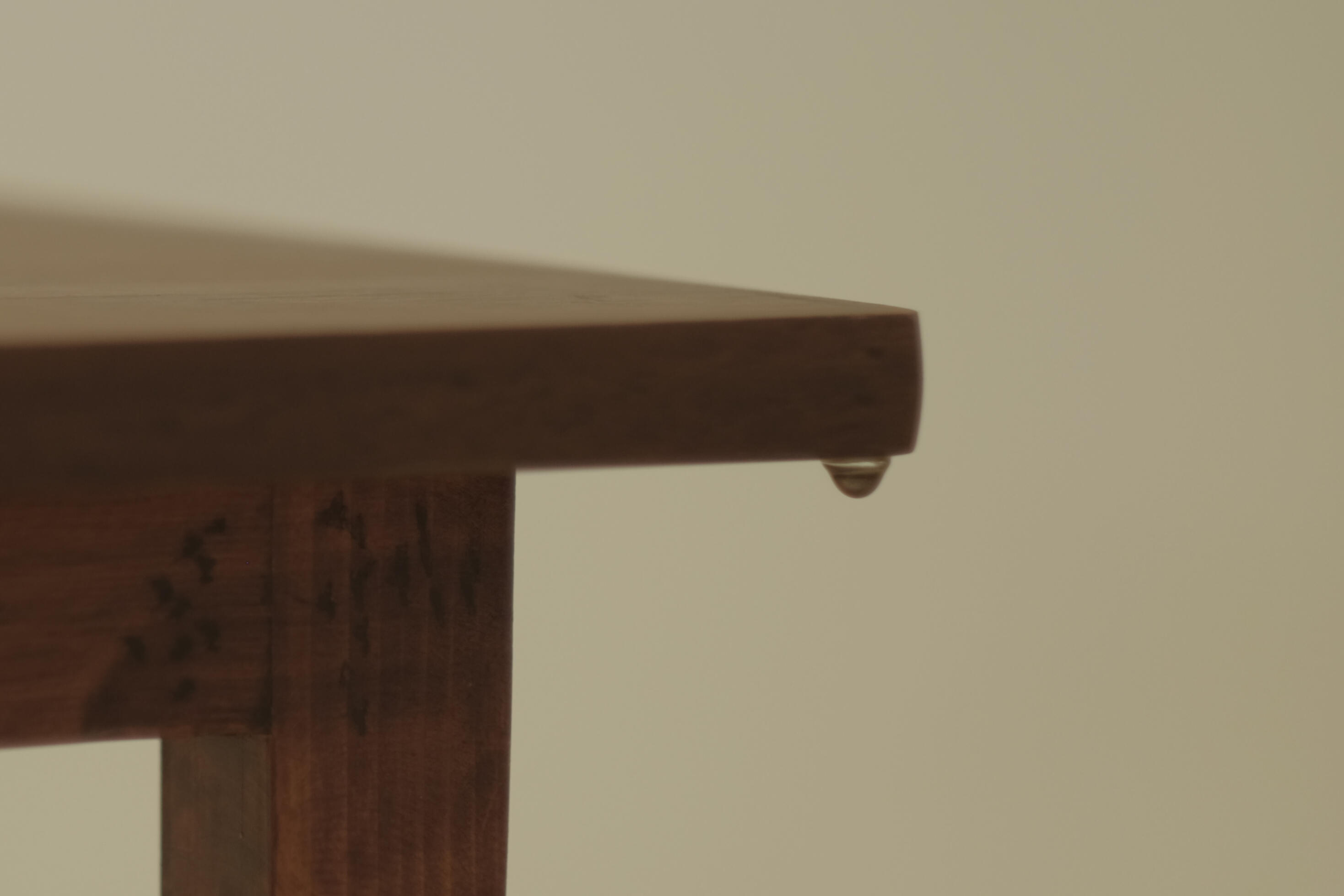
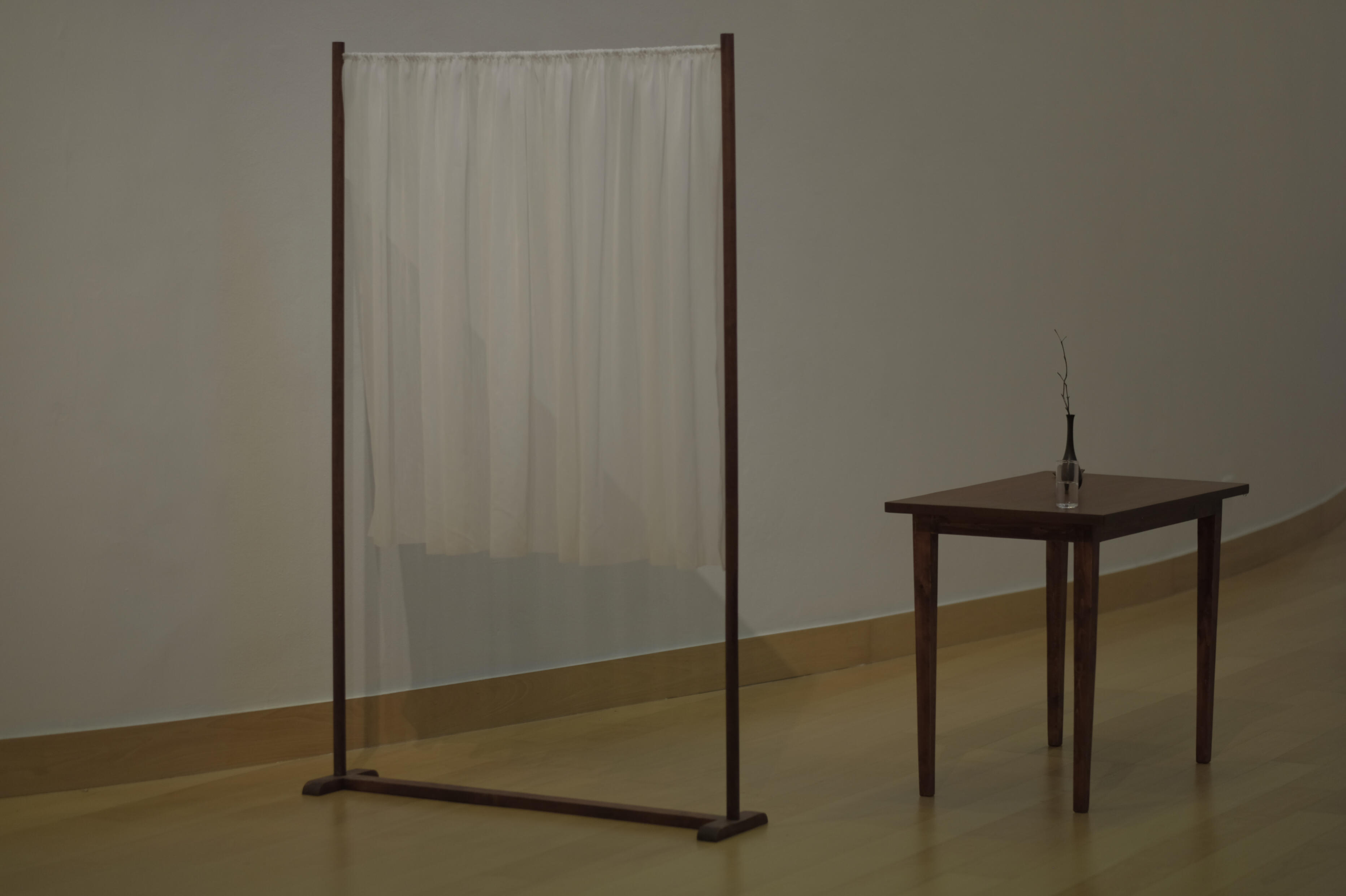
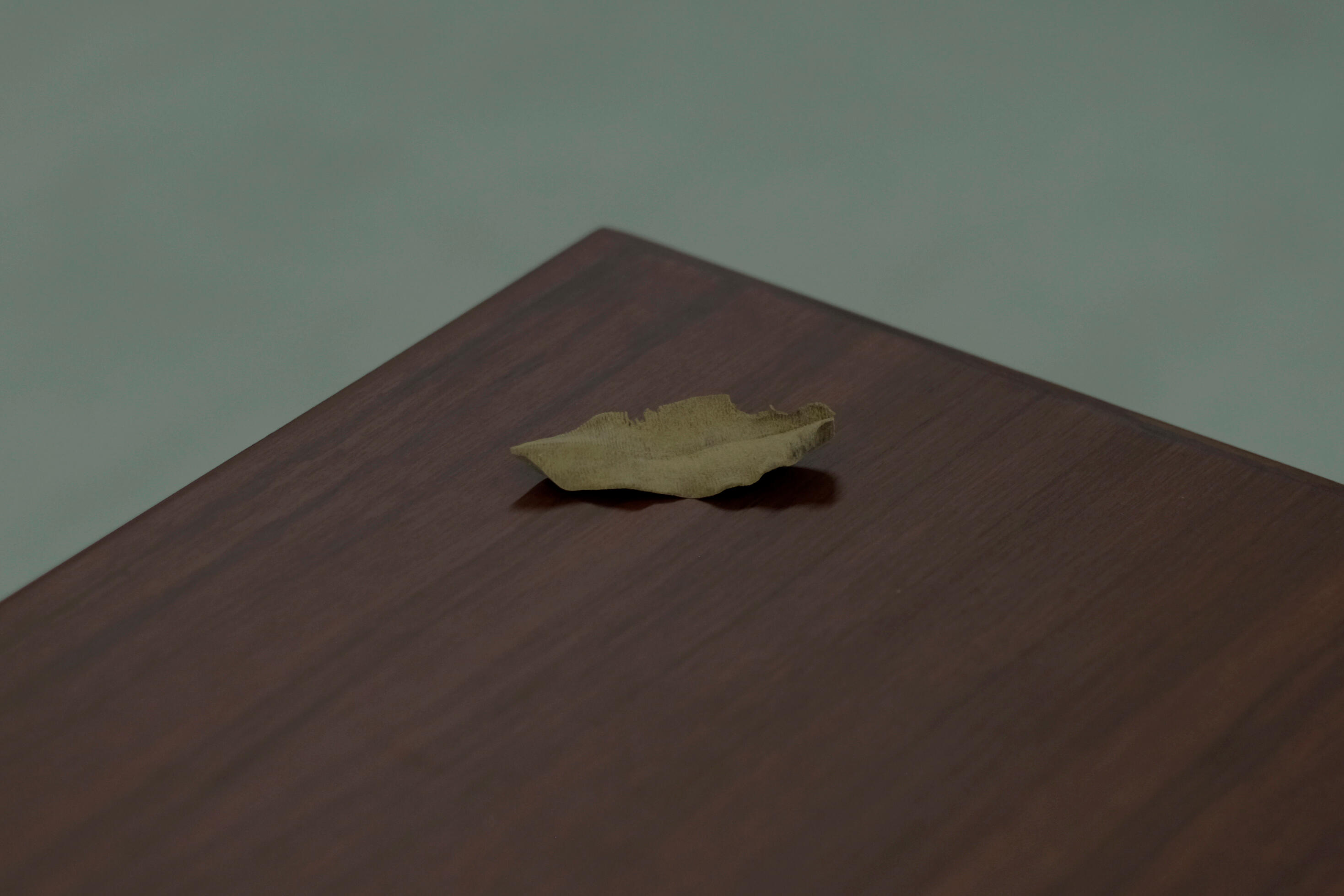
In the Summer Wind, 2018
Dimensions variable
Wood, Glass, Fabric and WaterIn the Summer Wind contemplates the ambiguity of time through a suspended glass droplet at the edge of a table. The droplet appears perpetually on the verge of falling, balanced between cohesion and gravity. It embodies two notions of the present: the subjective now, an unbroken continuity, and the objective now, a fleeting slice on the timeline of past and future.Traces surrounding the droplet amplify its tension. A faint ring of liquid on the tabletop and a sheen of water suggest something both present and vanishing. Formed from glass, the droplet is fragile yet immutable, impossible to use or consume, persisting in stillness while suggesting imminent change.Elsewhere in the installation, a thin wooden leaf, its grain inscribed with annual rings, recalls the passing of seasons while appearing to drift on an unseen breeze. A curtain, moved by air, makes visible the invisible currents that animate the room. Together, these elements hold a space between stillness and transition, inviting the viewer to linger in a moment that seems both suspended and eternal.
Element of Light, 2014-2017
Photography SeriesA atmospheric record of ambient light from multiple locations on earth, exposed directly onto film.
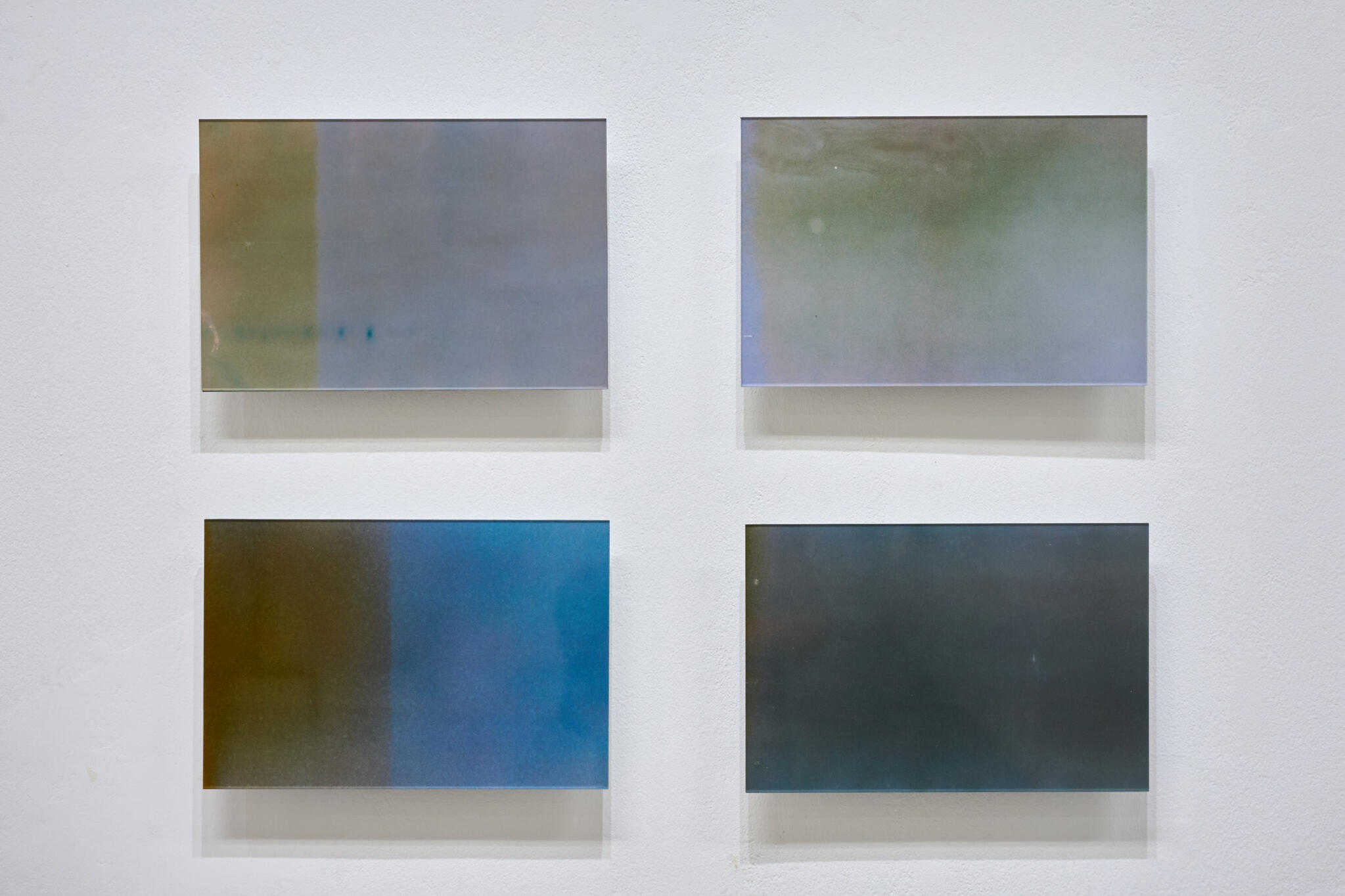
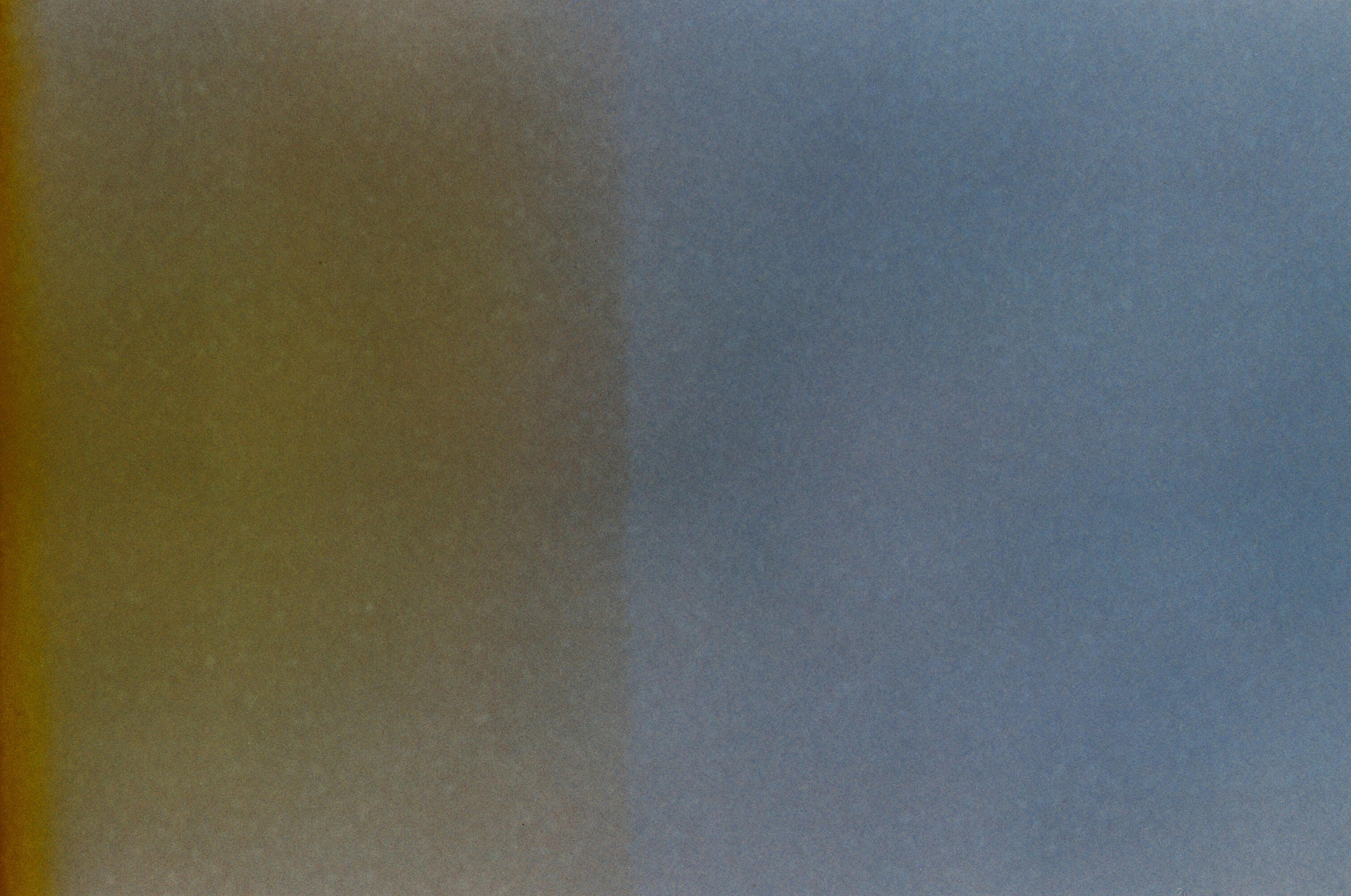
Prague, 2016
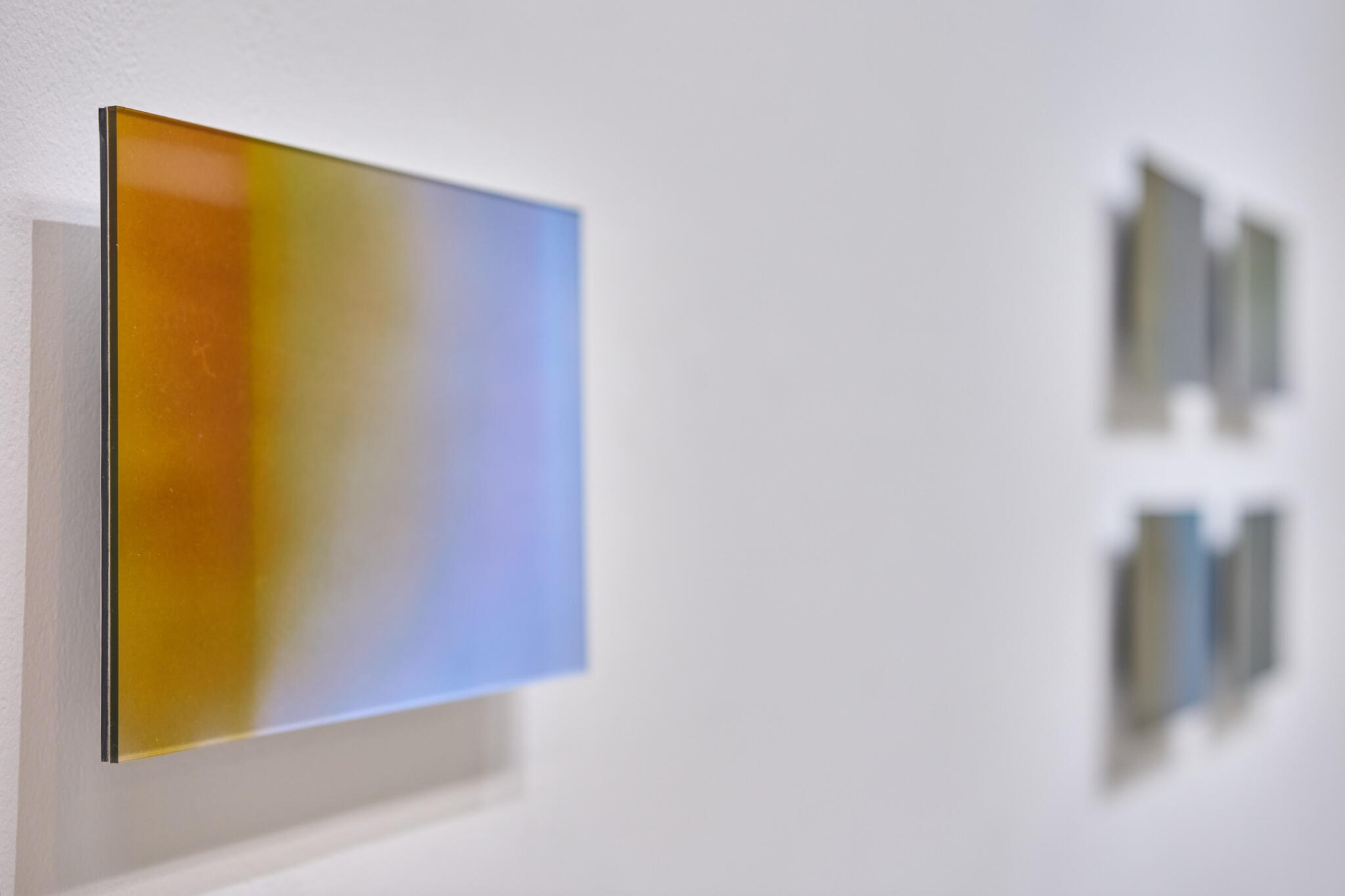
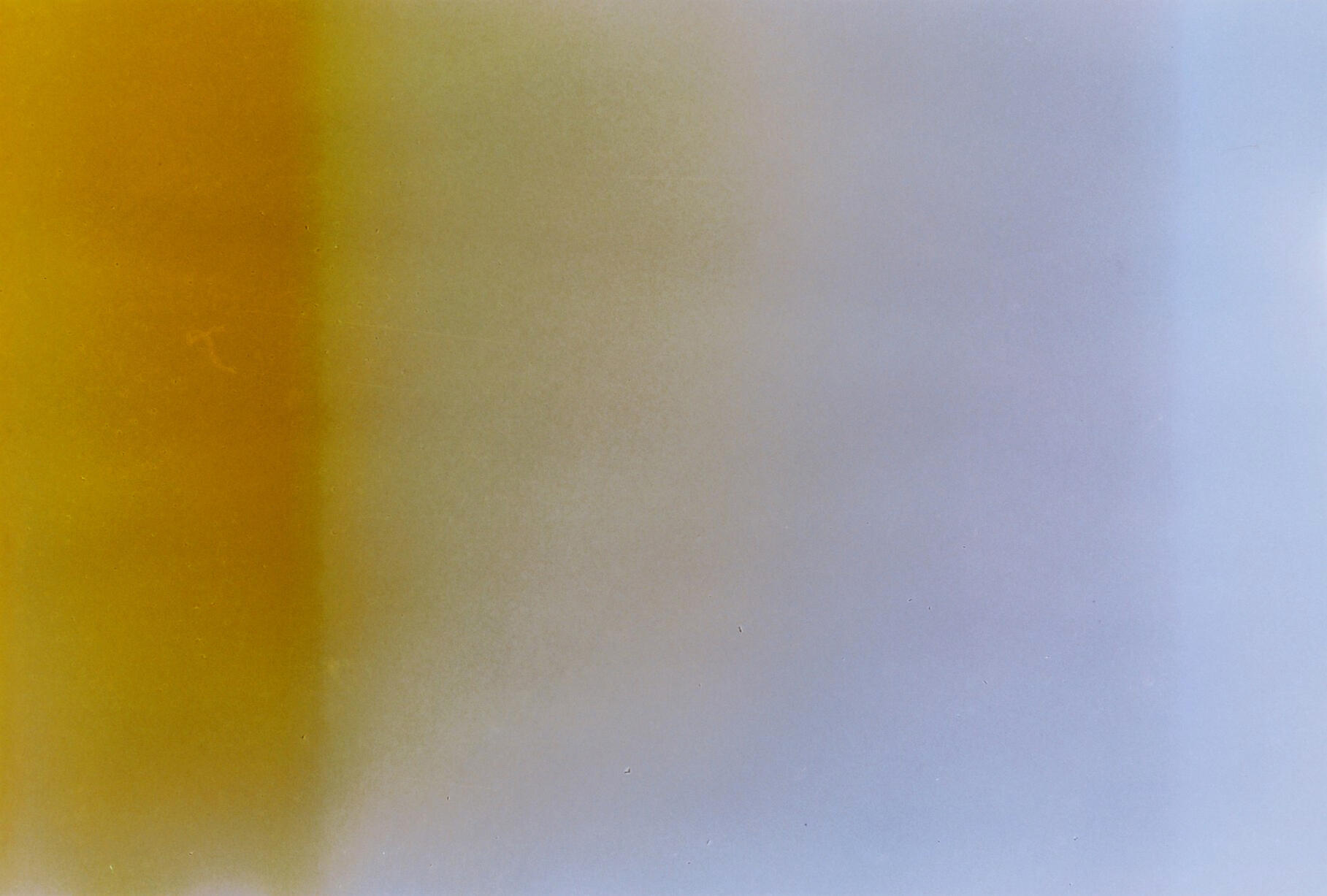
Seoul, 2014
Memorial of Time, 2018
Dimensions variable
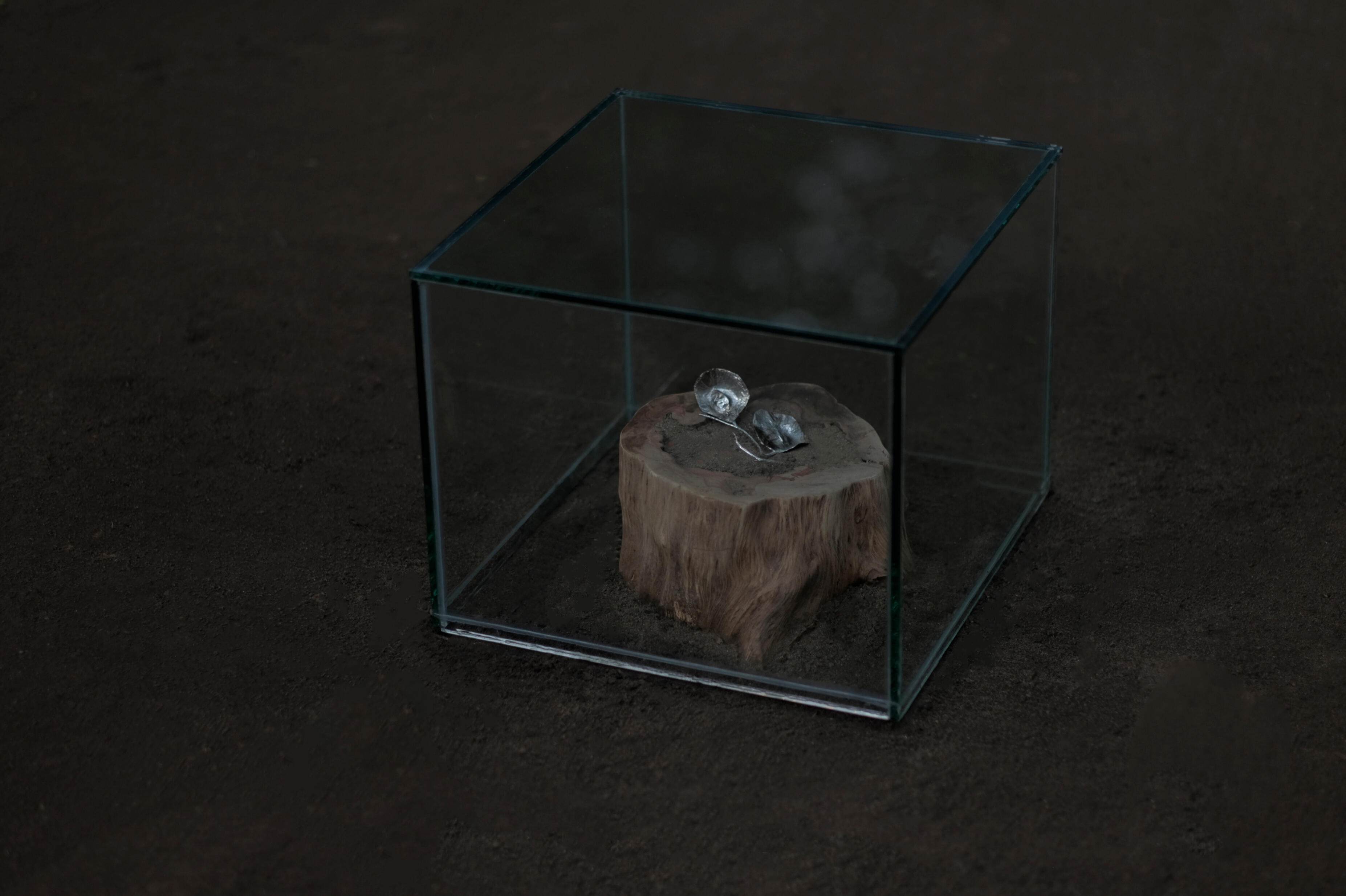
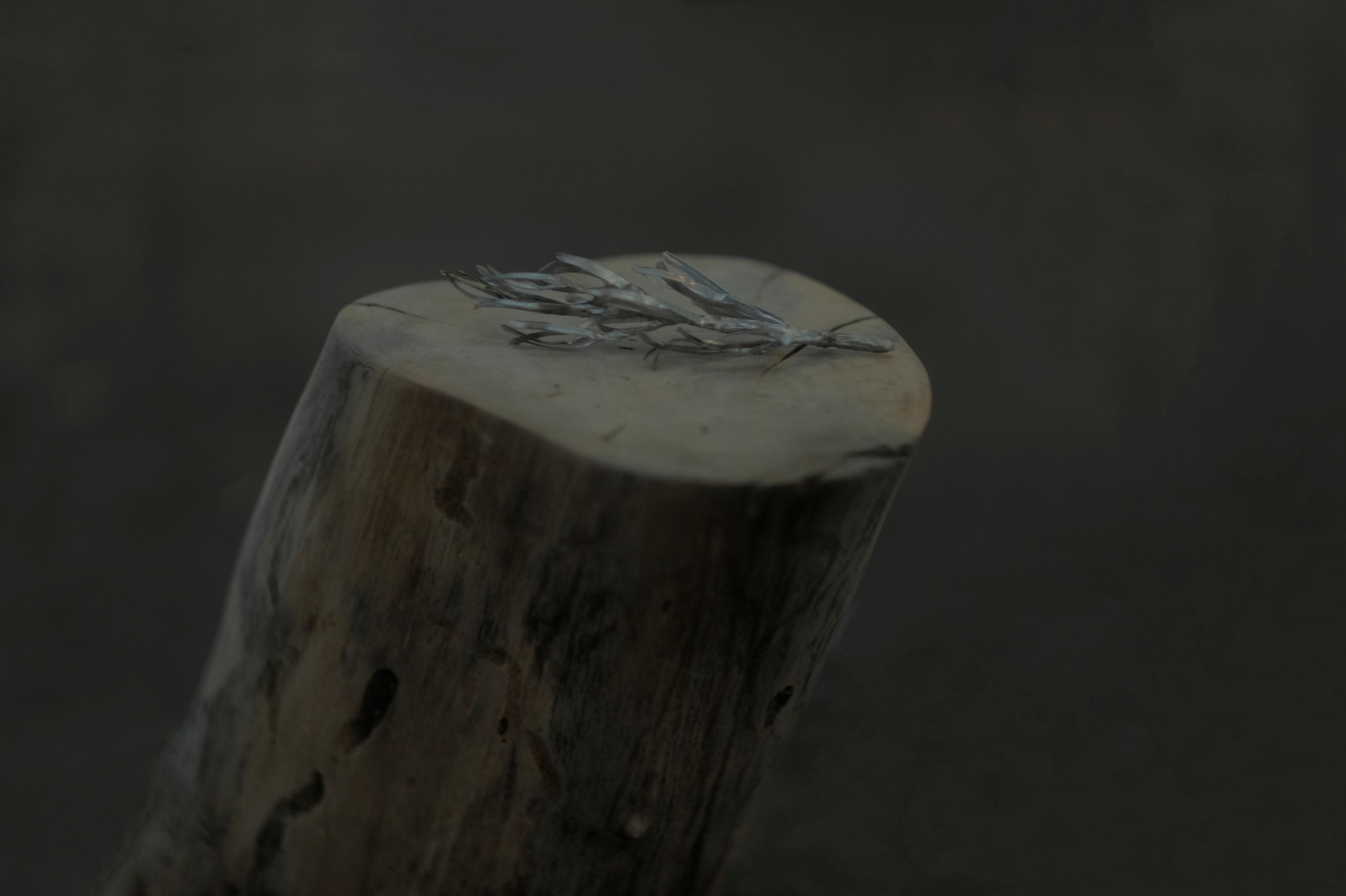
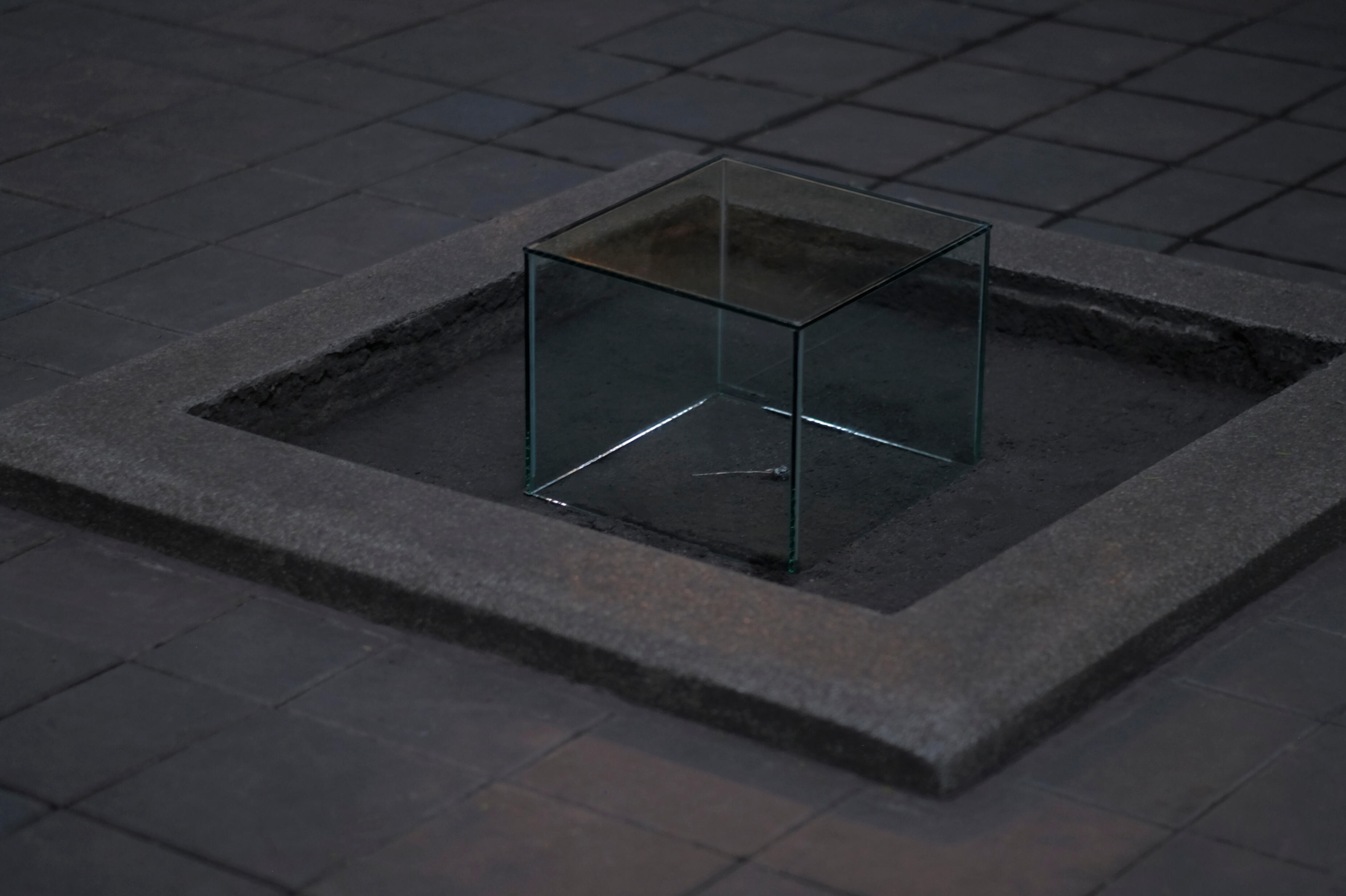
Site-specific installation, with aluminium, glass, and a poemMemorial of Time is a series of site-specific sculpture which explores the monumental quality of the site beyond the Praisaneeyakan building. The fragile pieces of aluminium foil sculptures are formed to represent the live plant parts, purposely exerting the audience’s cognitive connection between the skin-deep mimics made of material entirely inorganic and the absence of its live counterparts from which the sculpted forms are derived. The three pieces of sculptures are placed on positions related to each piece by floral language of the sculptures themselves and the poem dedicated for the memorial and temporal aspect of the site.The present Praisaneeyakarn served as the postal museum until it was closed to the public a few years later. There has been a proposed plan to demolish and rebuild the replica with more functional space. However, it is yet to be a certain public announcement about its future.All of the sculptures are made of aluminium foil, an inorganic material which is distributed in the form of thin sheets. The forms which sculptures have taken from its organic archetypes are hollow, fragile, and are only skin-deep. They are made to convey the narratives and the questions about this historical site, the relations between forms and our interpretations, and the monumentality of the building and its surrounding.
something there once was
something there is going to be
inscribed, packaged in the veins
to revive from what remainsfrom the soil
to the branches and buds
to the winged pods
to the soiland so the present shapes the shell
to send the former to the futureinside the package is a place
where time flows in its own pace
enclosed with image
of what it once was part
something there once was
something there is going to be